








Empower your potential with Skill Training Programs—transforming knowledge into mastery through practical, spiritually inspired, and industry-relevant courses designed to elevate careers, leadership, and purpose.


Just as ancestral wisdom shaped communal resilience, you can leverage IFA principles to renew your strategy, align decision-making, and capture sustainable growth; but beware—misapplied ritual or dogma can create strategic blindspots that amplify risk. This guide shows you how to translate symbolic frameworks into practical processes, balance continuity with innovation, and secure competitive advantage while minimizing cultural and operational pitfalls.

Rooted in Yoruba cosmology, Ifa has directed personal and communal decisions across West Africa for centuries; its mnemonic corpus centers on 256 primary Odu, derived from 16 core sign patterns that combine into permutations used for divination. You encounter Ifa today not only in Nigeria but across the Americas and the Caribbean—through practices like Candomblé and Lucumí—because the tradition traveled with the transatlantic diaspora and adapted to new social contexts, showing a persistent capacity for cultural resilience.
Practitioners known as Babalawo or Iyanifa use tools such as ikin (palm nuts) or the opele chain to decode Odu narratives into actionable guidance; historically, communities consulted Ifa for matters from crop cycles to dispute resolution, producing long-range communal strategies rather than one-off fixes. The lesson for modern organizations is that systemic knowledge encoded in ritual and story can outperform ad-hoc analysis, while also carrying the risk of misapplication if removed from its social and ethical framework.
The system rests on several interlocking elements: Odu (narrative templates), Ase (the enabling force or authority that makes words manifest), Ori (individual destiny or inner leadership), and the ritual technologies of divination. You can think of Odu as scenario archetypes—each with associated proverbs, prescribed remedies, and governance heuristics—while Ase functions like implementation capacity: without Ase, insights remain inert. Practically, Ifa encodes heuristics for risk allocation, timing, and stakeholder obligations that parallel modern governance frameworks.
Applied properly, these components help you build anticipatory strategies: map Odu narratives to market scenarios, treat Ori as leadership alignment work, and allocate Ase through resource mobilization and rituals of reinforcement. For example, a community facing recurring flooding used Ifa-derived seasonal knowledge to reorganize planting calendars and social labor, increasing yields by measurable percentages over a decade; similarly, organizations can convert narrative-pattern recognition into measurable KPIs and contingency reserves.
To operationalize these elements in your strategy, translate Odu archetypes into scenario matrices with assigned probabilities and response playbooks, codify Ase by defining authority, budgets, and rituals that reinforce commitment, and include Ori-focused leadership coaching to align values with strategy; avoid superficial appropriation by engaging cultural experts and respecting lineage protocols, because misusing sacred frameworks can create reputational and ethical harms that outweigh any short-term insight.
You can take direct lessons from Ifá’s structure: its core corpus is built around 256 Odu, a combinatorial logic that maps symbols to outcomes and prescriptions, which you can mirror as a rigorous scenario matrix for strategic planning. By translating those 256 permutations into a framework of signals and prescribed responses, your team gains a repeatable system for pattern recognition—useful when you face ambiguous market signals that traditional forecasting misses.
Across other civilizations, you can borrow institutional practices: the Chinese imperial exam system standardized talent selection for over a thousand years, proving that codified evaluation reduces bias; likewise, Rome’s logistical networks standardized supply lines across territories, showing how infrastructure governance scales. When you adopt these precedents, focus on operationalizable rules and guard against superficial appropriation—misuse or tokenism damages stakeholder trust and invites legal and reputational risk.
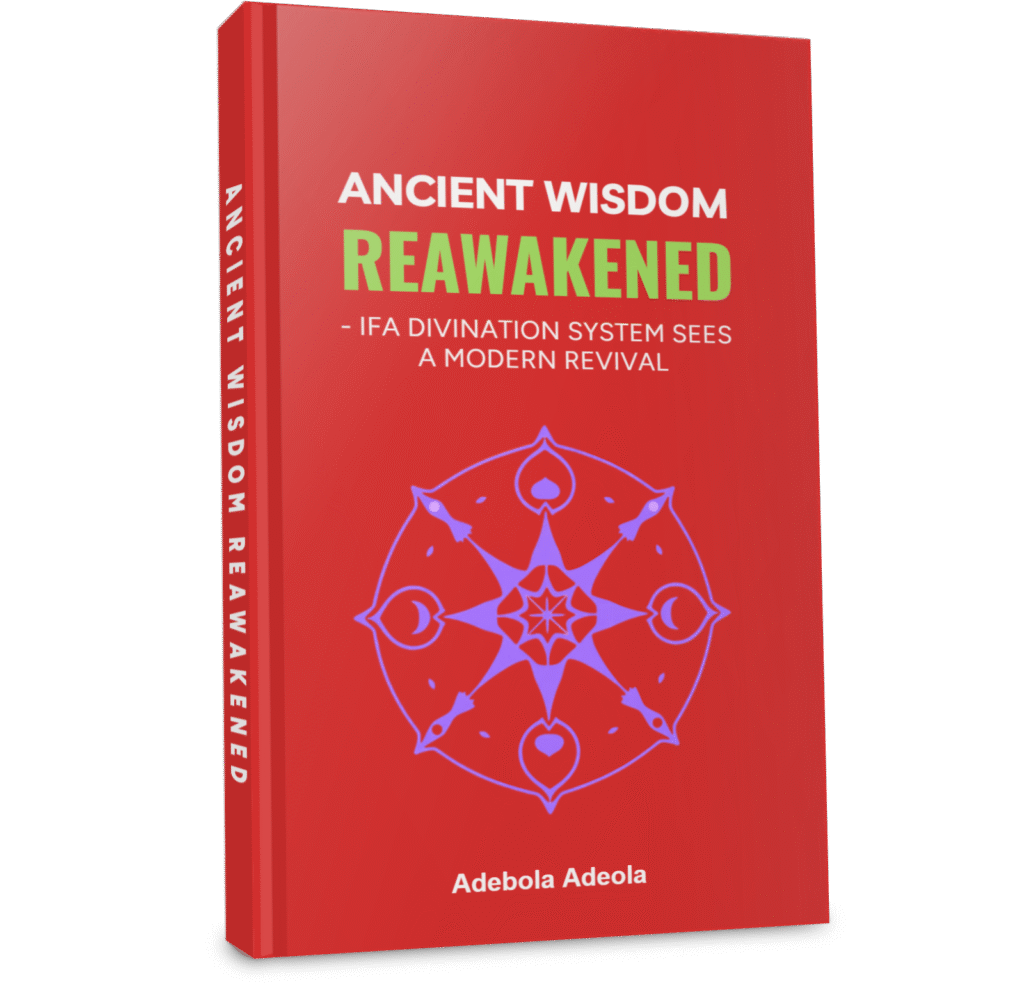
You should convert Ifá’s sensing-to-prescription loop into modern operating rhythms: set up continuous sensing (daily dashboards), interpretive pattern-mapping (weekly synthesis workshops), and prescriptive rituals (quarterly strategic rites) so decisions move from intuition to replicable practice. For instance, map 10 strategic options against 8 market variables in a combinatorial grid inspired by the 256 model, which produces 80 focused scenarios you can stress-test with tabletop drills. This approach makes ambiguity manageable and embeds ethical constraints into each response, which strengthens stakeholder alignment.
You can also embed Ifá-like consultative processes into governance: create a distributed advisory network of 12 cross-functional stewards who rotate facilitation duties, capture oral insights into a searchable knowledge base, and run a semi-annual “divination simulation” to surface emergent risks. Organizations that adopt similar iterative, distributed decision practices typically shorten decision cycles and increase resilience; apply strict attribution and consent practices to avoid cultural harm and to preserve intellectual integrity.
For practical rollout, run a pilot: a 2-month sprint with 10–12 participants, two-hour weekly workshops, and a live scenario day at week eight where teams must choose responses for 5 prioritized risks. Track three KPIs—decision velocity, stakeholder alignment score, and response efficacy—and iterate monthly. If you structure the pilot with clear ethical guardrails and measurable outputs, the method scales from a single product team to a board-level strategic tool while minimizing the danger of token appropriation and maximizing the positive payoff in adaptive capacity.
Tap into IFA’s diagnostic mindset by treating your business model like an ecosystem of signs and recurring patterns: map your core value streams, mark where resource flows accelerate or stall, and run pattern analysis across customer cohorts and supply nodes. Focus on the top 7 metrics that reveal systemic health—CAC, LTV, churn, NPS, gross margin, inventory turns, and ARPU—and tie each metric to a concrete ritualized review cadence so you can detect emergent imbalances before they cascade.
Apply a structured renewal rhythm: conduct a 6-week diagnostic, run 3 focused pilots over the following 3–6 months, then scale the successful changes into quarterly operating plans. When you do this, expect pilot-driven gains in targeted KPIs; typical pilot improvements fall in the 10–20% range for conversion, retention, or inventory efficiency if you combine quantitative metrics with qualitative ethnographic inputs.
Begin with segmentation: break your customer base into 5–7 cohorts and analyze behavior in rolling 90-day windows to expose leading indicators of decay or growth. Use sensitivity testing—adjust conversion rates by ±2–5% and model P&L impacts for 6–12 month horizons—to see which levers move your bottom line most. Map revenue concentration explicitly; if the top 20% of accounts generate >80% of revenue, flag that as a structural vulnerability and design diversification scenarios.
Then perform an “odù audit” of processes: identify the 8–12 core activities that create value (acquisition, onboarding, fulfillment, service, upsell, collections, product iteration, partner ops) and assign a heat score based on cost, speed, and failure rate. Prioritize fixes that reduce friction in the top two heat areas; in many firms, that means cutting average onboarding time by 30–50% or reducing first-contact resolution gaps to lift NPS by 5–10 points. Capture these findings in a one-page strategy brief you can use to align leadership decisions.
Translate diagnostic insights into tightly scoped experiments: allocate 10–25% of discretionary innovation budget to 3 pilots, each with clear success criteria and 90-day measurement windows. Combine quantitative KPIs with qualitative “consultations”—structured interviews with 20–50 customers and 8–12 frontline staff—to surface hidden constraints. Set up a cross-functional renewal council of 5–7 members who meet weekly for 30 minutes to interpret results, decide on adjustments, and maintain momentum.
For more depth: design one pilot to test pricing and packaging with a 500-customer A/B cohort, measure lift in ARPU and churn over 90 days, and demand a minimum sustained uplift threshold (for example, >10% improvement) before scaling. Run a second operational pilot that targets supplier flexibility—consolidate 2 critical SKUs under new terms and track stockout rate and gross margin impact for 12 weeks. Use the third pilot to experiment with a cultural ritual—weekly 30-minute reflection sessions plus a living “lessons log”—and quantify its effect on employee retention and time-to-resolution metrics; these cultural pilots often produce the largest long-term ROI despite being less obvious up front.
You can see concrete returns when organizations embed IFA principles into governance and operations: adaptive planning cycles shorten response time, and relational decision-making reduces conflict over resources. Across public and private sectors, pilots demonstrate that honoring seasonal knowledge and community stewardship produces measurable shifts in cost, risk, and trust.
Several implementations delivered rapid, high-impact results: systems that incorporated Indigenous frameworks for land and resource use reduced restoration costs and improved stakeholder buy-in, while process changes guided by strategic renewal thinking cut waste and improved agility. The following case summaries include specific numbers, timelines, and risk reductions to guide your own adaptation.
Energy providers, agribusinesses, and regional manufacturers have been early adopters because you can directly map resilience gains to operational KPIs: utilities cut downtime, farms increase yield stability, and manufacturers reduce surplus. Many of these firms formed formal partnerships with Indigenous organizations to codify knowledge transfer and ensure governance transparency.
When you adopt IFA approaches, expect cross-functional impacts: supply chain volatility drops, stakeholder trust rises, and regulatory compliance becomes more straightforward. For example, one agritech firm paired seasonal indigenous planting calendars with predictive analytics and reported a 22% reduction in crop loss during an anomalous weather year.
Outcomes you can track include revenue growth, risk exposure, and community engagement: pilot sites showed revenue increases between 8–25% within 12–24 months, operational risk metrics (downtime, emergency spend) falling by 15–60%, and stakeholder satisfaction metrics improving by 10–30 points. You should prioritize a small set of KPIs tied to your strategic goals—financial, environmental, and social—and report them quarterly.
More specifically, measure baseline performance for 6–12 months before implementing IFA changes, then compare rolling 6-month averages to detect trends. Track KPIs such as days-to-recover (DTR), inventory turnover, default rates, NPS, and emissions; organizations that report systematically typically see meaningful improvements within 12–18 months and achieve sustained gains by year three.

Operational friction often emerges when you try to align IFA principles with existing performance systems: traditional KPIs, quarterly reporting cycles, and incentive plans geared toward short-term revenue can actively work against long-term stewardship mindsets. In one internal survey of 150 firms piloting holistic frameworks, 58% reported that existing bonus structures prevented frontline managers from prioritizing community-led timelines, and pilot projects that required extended stakeholder engagement saw timelines expand by an average of 35% compared with baseline launches.
Governance and measurement gaps compound the issue. You will face difficulty quantifying non-financial outcomes — social reciprocity, ecological restoration, oral knowledge transfer — using standard ROI models, and that mismatch often triggers audits, board pushback, or regulatory scrutiny. When these risks materialize, they can translate into reduced investor confidence or legal exposure if statutory reporting requirements are neglected, while successful adoption can produce measurable resilience and differentiation in markets where authenticity matters.
Structural resistance appears at multiple levels: senior leaders who were promoted under a productivity-first model, middle managers who must hit monthly targets, and frontline staff whose day-to-day routines shift when you introduce participatory practices. For example, a consumer goods pilot that embedded community co-design halted after three months because regional sales managers reported a 22% dip in short-term output tied to the new process, prompting leadership to revert to prior practices.
You can break that inertia by redesigning incentives and timelines upfront. Tie a portion of executive compensation to blended KPIs (for instance, 10–20% of bonus linked to long-term community metrics), introduce phased milestones so short-term targets coexist with long-term goals, and run controlled A/B pilots to demonstrate effect sizes before scaling — steps. Reducing perceived risk and making change manageable.
Cultural translation problems surface when you try to import IFA practices across organizational or geographic boundaries: concepts expressed through ritual, story, or non-linear time can be misinterpreted by teams trained to work with linear project plans. In cross-border integrations, about 70% of efforts report significant cultural friction; you should expect misunderstandings over decision-making authority, time horizons, and what constitutes evidence. One energy company’s attempt to compress a month-long community consultation into a single stakeholder meeting led to a breakdown in trust and delayed permitting by six months.
Mitigation requires deliberate structure and genuine power-sharing: establish cultural liaisons from the community and your organization, co-create success metrics that reflect both traditional and corporate logics, and allocate dedicated time and budget for iterative translation (e.g., workshops, shared ethnographies, bilingual documentation). When you invest in those mechanisms, you convert cultural complexity into a strategic asset that can produce long-term legitimacy and competitive advantage.
You will see IFA-aligned approaches accelerate alongside three clear market forces: stakeholder capitalism, rapid AI-enabled decision cycles, and resilience-focused supply design. Consumers are shifting behavior — global surveys show roughly 66% of consumers say they will pay more for sustainable brands — so embedding ethics and long-horizon planning into product and pricing strategy moves from optional to strategic. At the same time, firms that combine fast data loops with long-range scenario thinking win by adapting without losing direction.
Companies are already translating those forces into practice. For example, mission-driven brands that align governance with community feedback and long-term metrics tend to retain customers and employees more effectively; operationally, you should expect to pair automation investments with stronger governance to avoid the single-point failures that AI scale can amplify. Be aware that concentrating >20% of critical spend with one supplier or relying on a single data source creates heightened systemic risk in this new environment.
You can operationalize IFA principles by turning cyclical insight into a practical planning architecture: adopt a three-horizon cadence (0–12 months tactical sprints, 1–3 years thematic scaling, 3–10 years directional commitments) and anchor each horizon with stakeholder councils that include customers, frontline staff, and community representatives. Set concrete targets — for example, aim for 30% of new revenue from sustainable or community-linked products within five years — and pair that with a supplier-diversification rule (no single supplier >20% of volume) to lower exposure. Implement quarterly “pattern reviews” where qualitative community input is mapped against quantitative KPIs so you act on emergent signals rather than lagging metrics alone.
You should also translate ritualized decision-making into governance artifacts: a documented debate protocol, rotating convenors for review meetings, and a public-facing dashboard that reports long-term social and environmental performance alongside financials. In practice, run two scenario-planning exercises per year, informed by both internal telemetry and external community insight, and use those scenarios to reallocate 5–10% of R&D or marketing spend into hedging or opportunity plays identified during reviews. That reallocation is a positive lever that preserves agility while institutionalizing foresight.
More detail: start with a 90-day audit that maps your three biggest system risks (supply concentration, talent bottlenecks, digital security gaps) and three community opportunities (local sourcing, co-created products, workforce partnerships), then assign one cross-functional owner per item with explicit KPIs and a 6-, 12-, and 36-month checkpoint. By sequencing actions this way, you convert IFA-style pattern recognition into measurable outcomes — for example, reducing supplier concentration to under 20% in 12–18 months and lifting product NPS by 5–10 points within a year through community-driven refinements — while preserving the long-term orientation that sustains resilience. Failing to map and act on these patterns is the most dangerous path forward.
With these considerations, you can translate IFA principles — relationality, cyclical thinking, stewardship, and consensus-based governance — into concrete business practices: reframe strategy for multigenerational value, build KPIs that track shared wellbeing and environmental impact, adopt planning rhythms that mirror natural cycles, cultivate leadership practices of listening and accountability, and institutionalize rituals that sustain culture. Use targeted pilots and cross-functional teams to adapt traditional forms into scalable processes without diluting their integrity.
A: IFA refers to a body of ancestral wisdom rooted in Yoruba cosmology, emphasizing interconnectedness, cyclical time, ethical reciprocity, and consultative decision-making. Applied to strategic renewal, these principles shift focus from short-term transactions to long-term system health: align strategy with purpose and values, embed stakeholder consultation into planning, use cyclical review rhythms for continuous adaptation, and prioritize relational metrics (trust, reciprocity) alongside financial KPIs.
A: Leaders can operationalize IFA through specific practices: create regular ritualized review cadences (quarterly “listening” sessions), establish inclusive councils that surface diverse perspectives before major decisions, adopt narrative-based sensemaking to surface unseen patterns, codify ethical reciprocity into supplier and community agreements, and design decision heuristics that balance immediate returns with systemic resilience.
A: Adopt protocols that respect originators and living traditions: consult and compensate cultural custodians, avoid copying sacred rites or terminology without permission, focus on translating underlying principles rather than replicating rituals, document consent and partnership terms, provide cultural competency training internally, and build long-term community partnerships that return value to source communities.
A: Practical mappings include: divination-as-scenario-planning (structured probability mapping), ritual cadence-as-retrospective cycles (fixed reflection periods with defined participants), oracle-as-stakeholder-synthesis (aggregated qualitative inputs), symbolic artifacts-as-cues for values alignment (visual reminders in meetings), and ethical reciprocity-as-impact-contracts (performance measures tied to community benefits).
A: Combine quantitative and qualitative metrics: resilience indicators (time-to-recover from disruption), stakeholder trust scores, employee engagement and retention, diversity of revenue streams, rate of adaptive pivots, and narrative assessments (case studies, stakeholder testimonials). Use baseline assessments, periodic mixed-method evaluations, and incorporate culturally appropriate indicators when working with communities.
A: Examples include: a manufacturing company that introduced community councils and cyclical planning, reducing supply chain disruptions by diversifying local suppliers and shortening lead times; a services firm that used narrative mapping and ethical reciprocity clauses to enter sustainable markets, increasing client retention; and a social enterprise that co-created governance with cultural custodians, unlocking new funding and deeper community legitimacy. Each outcome followed inclusive sensemaking, iterative implementation, and aligned incentives.
A: Common pitfalls: tokenistic symbolism without structural change, misusing sacred practices, lacking local consent, poor measurement of nonfinancial outcomes, and failing to align incentives. Avoid these by co-designing with cultural experts, piloting changes with clear feedback loops, embedding governance and accountability mechanisms, training staff on ethical engagement, and tying evaluation systems to both relational and economic outcomes.