








Empower your potential with Skill Training Programs—transforming knowledge into mastery through practical, spiritually inspired, and industry-relevant courses designed to elevate careers, leadership, and purpose.


Ifa invites you to adopt a living philosophy that offers practical ethical guidance for daily choices and community life while challenging you to engage with destiny and responsibility. By treating Ifa as a worldview, you gain transformative tools for self-knowledge and resilience. Yet, you must navigate its rites respectfully to avoid misinterpretation that can harm communities or individuals.
Rooted in the Yoruba heartland of present-day Nigeria, Benin, and Togo, Ifa developed as a system of cosmology and social law over many centuries, with its priestly figure, Orunmila, at the center as the deity of wisdom and divination. Across the transatlantic slave trade (roughly the 16th–19th centuries), Ifa elements were carried into the Americas and reconfigured into traditions such as Lukumi/Regla de Ocha in Cuba, Candomblé in Brazil, and related practices in Trinidad and Haiti, so that today it is practiced by millions both in West Africa and throughout the diaspora.
Over time, the tradition was institutionalized through the Babalawo/Iyanifa priesthood, where training is intensive—apprenticeships commonly span several years (often 7–10)—and knowledge is transmitted orally through apprenticeship and ritual practice. During colonial periods and missionary pressure, some public expressions were suppressed, yet you can still trace continuity in ritual texts, the canonical body of the 256 Odu, and local lineages that preserved Ifa’s liturgies and prescriptions into the modern era.
At the center of Ifa’s worldview is a framework that links destiny, moral responsibility, and communal balance: Ori (the inner head or personal destiny) guides individual purpose, while Orunmila and the corpus of 256 Odu provide the language used in divination to diagnose life situations. You will encounter a strong normative ethic—advice for marriages, crops, health, and conflict resolution—that is delivered through divination and enacted through prescribed remedies.
Practically, divination is performed with an opele chain or 16 palm kernels (ikin), producing patterns mapped to the Odu; a Babalawo or Iyanifa interprets these signs and prescribes an ebo (sacrifice/ritual remedy), offerings, or behavioral changes. Specific examples include prescribing a chicken and palm oil offering to placate an ancestor, or advising a business partnership be delayed until an Odu indicates favorable timing; because those prescriptions can affect livelihoods and social relations, relying on an experienced practitioner matters—misguided rituals or untrained interventions can provoke social or financial harm.
For a clear example of how this plays out: during a recorded case in southwestern Nigeria, a farmer who consulted a Babalawo after three failed harvests received a divination that combined two Odu indicating soil imbalance and an ancestral grievance; the remedy involved a soil-restoration ritual plus a reconciliation offering to the lineage shrine, after which yields improved the following season—illustrating how Ifa blends ecological, familial and ritual prescriptions into a single course of action you can follow.
You use Ifa not simply as ritual protocol but as a structured, practical guide that maps cosmology onto everyday choices. With 256 Odu functioning as an encyclopedia of scenarios, sayings, and prescriptions, you can draw on specific verses to resolve family disputes, time business launches, or set rites for births and deaths; practitioners commonly reference a subset of 16 principal Odu for quick framing before plunging into the full corpus. In practice, that means consulting divination to choose dates, calibrate obligations to ancestors, or decide whether to accept a job offer—actions that translate metaphysical insight into measurable steps.
Daily life shaped by Ifa often looks like a rhythm of small, intentional acts: short morning libations, weekly offerings, and concrete behavioral commitments that reinforce social bonds and personal destiny. For example, you might be advised by a Babalawo to perform a three‑day cleansing, make a specific offering of fruits and palm oil, and commit to a 21‑day habit change (such as refraining from gossip) to address a recurring relationship problem; those integrated prescriptions combine ritual practice with behavioral therapy and community accountability.
You ground your choices in a few central concepts: Iwa (good character), Ori (inner destiny/head), and Ashe (life‑force or authority). Practically, that means your reputation and conduct are treated as active forces—if you cultivate Iwa through honesty and restraint, opportunities align more readily with your Ori. In neighborhoods and families, this shows up as clear social expectations: elders mediate using Ifa stories to model temperance, while festivals and shared meals distribute responsibility and reinforce reciprocal obligations.
Concrete habits help you live those principles. Spend 15–30 minutes each morning in reflection or a brief offering to honor Ori, consult Ifa before major financial moves, and accept community service obligations that maintain social capital. When farmers in Ogun or traders in Oyo consult Ifa before planting or expanding inventory, the guidance often specifies timing, small ritual costs, and behavioral checks—simple prescriptions that balance risk, timing, and ethical conduct.
You make ethical choices in Ifa by treating narratives and divination outcomes as precedent and counsel: the Odu contains parables that function like case law, showing consequences for greed, betrayal, or generosity. Core norms—Iwa Pele (gentle character), justice, and reciprocity—are operationalized through concrete actions such as restitution, sponsorship of communal rites, or public apologies. When you act, the expectation is to weigh personal gain against obligations to family, community, and ancestors.
Decision making follows a predictable procedure: cast the ifa (with Opele or ikin), identify the matching Odu, then translate the prescribed ese (poem) into tangible remedies—sacrifices, behavioral reforms, timelines, or community reparations. For instance, if you’re weighing emigration, Ifa might advise specific sequencing (wait X months), a modest offering costing a set amount, and tasks to settle communal debts before departure; ignoring such guidance is seen as exposing you to social and spiritual risk and can worsen conflicts.
More specifically, moral reasoning in Ifa is casuistic: you analyze a present case by mapping it to recorded ese that describe similar outcomes and remedies, then apply proportionate, restorative measures. That often results in practical, measurable prescriptions—returning property, performing a seven‑day cleansing, sponsoring a feast for injured parties, or undertaking a period of service—that both repair harm and reintegrate individuals into communal life. Divination, therefore, functions as a combined ethical audit and action plan, prioritizing restitution and ongoing accountability over abstract punishment.
You can treat Ifa as a living epistemology that informs decisions beyond ceremonial contexts, using its corpus of 16 principal signs and 256 Odu as structured case studies in causality and ethics. By reading Odu narratives as moral algorithms rather than merely prescriptions, you translate metaphors into decision rules: which actions tend to produce which outcomes, what trade-offs to expect, and how responsibility is distributed across agents and circumstances.
When you apply Ifa philosophically, rituals become testable hypotheses rather than opaque commands; divination outcomes function like data points you compare over time. Practically speaking, this means keeping a log of divination guidance, outcomes, and variables—over 12 months, you can start to identify recurring Odu patterns that reliably advise on business cycles, health interventions, or family disputes.
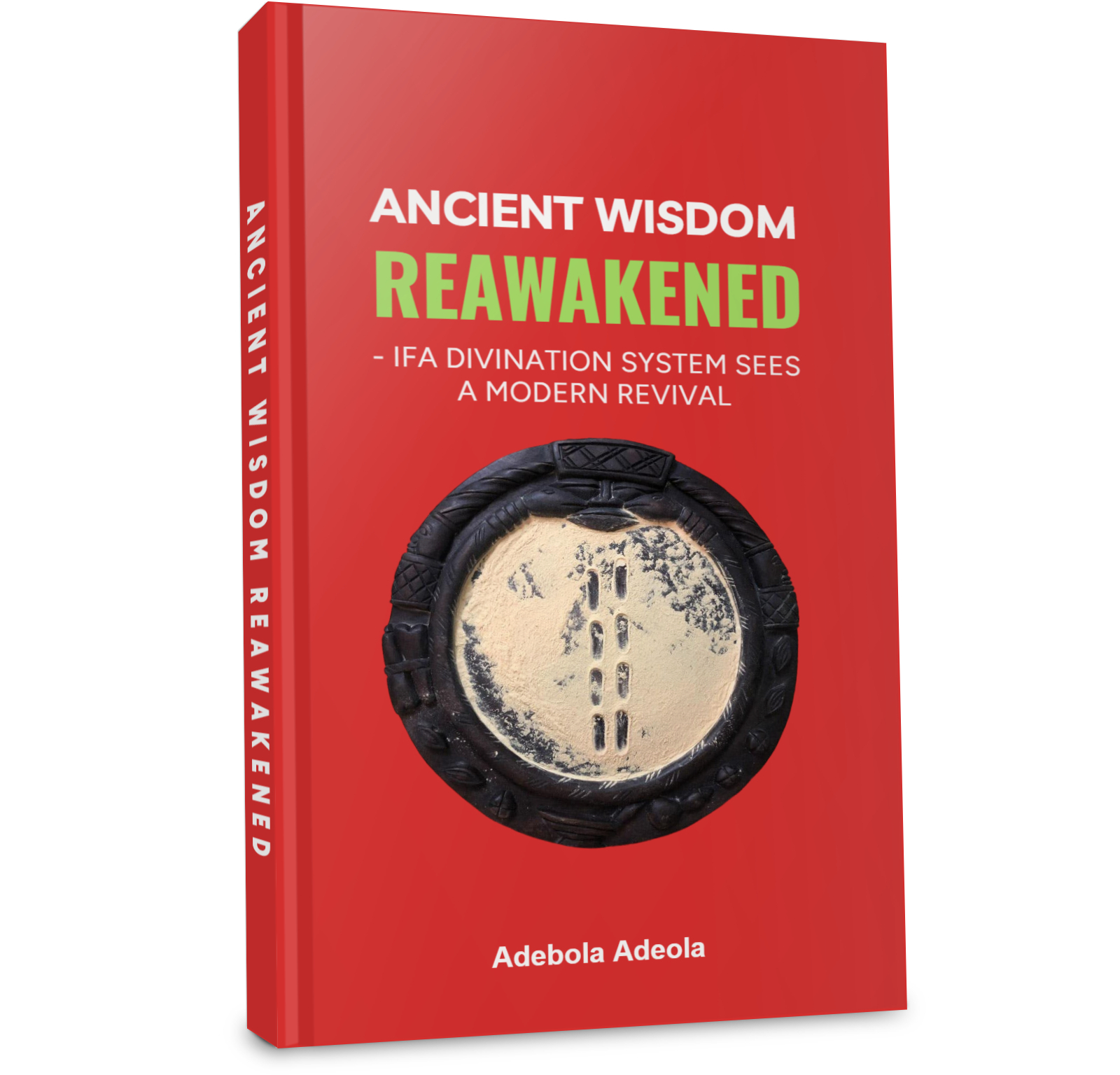
Get your copy of Ancient Wisdom Reawakened: IFA Divination System Sees a Modern Revival —
Now available in soft cover on Amazon.
Gift wisdom. Share balance. Awaken destiny.
Rather than confining Ifa to altar work, you can adopt its techniques for inner cultivation: cultivating iwa-pele (well-balanced character), employing Odu narratives as reflective prompts, and using divinatory metaphors to reframe setbacks into strategic adjustments. For example, an Odu that emphasizes patience can become a concrete practice plan—daily reflection, boundary-setting at work, and a three-step de-escalation routine for family tensions.
Likewise, you can integrate Ifa’s epistemic tools—analogy, story, and pattern recognition—into routine problem-solving: map a current dilemma to a comparable Odu story, extract the prescribed virtues and actions, and then operationalize them into measurable steps. Over six months, this approach often reduces reactive behavior and increases consistency in ethical choices.
Your engagement with Ifa gains durability when embedded in communal structures: family shrines, town councils, and ritual societies transmit interpretive norms that keep individual reasoning accountable. Ancestors function as a distributed memory bank; their injunctions and precedents are cited in dispute resolution, land claims, and rites of passage, giving you access to intergenerational wisdom while subjecting decisions to social scrutiny.
Participation matters: attending egungun masquerades, consulting a Babalawo with ikin or opele, or maintaining a family altar are practices that reinforce collective norms and provide corrective feedback when your philosophical interpretations drift. Social sanction or approval from elders often shapes how an Odu’s advice is implemented, so you should view community input as a form of empirical peer review.
To deepen this practice, you can document lineage cases—who consulted which Odu, what actions followed, and the communal consequences—and share those records in family meetings or ritual committees. Doing so creates a localized corpus of outcomes that both preserves ancestral guidance and refines the philosophical application of Ifa across generations.
By mapping your choices against the 256 Odù and the patterns interpreted by a trained Babalawo, Ifa gives you a systematic lens for long-term self-development rather than a one-off ritual. You gain a framework for identifying recurring behavioral patterns, concrete prescriptions (rituals, lifestyle adjustments, offerings, and community actions), and measurable checkpoints; many lineages expect apprenticeships of 7–12 years, which models the sustained discipline Ifa encourages in practitioners. As a result, Ifa shapes habits, clarifies priorities, and provides a repeatable method for iterative growth.
Applied consistently, Ifa becomes a decision-making tool: you learn to weigh options against divinatory counsel, test outcomes, and refine actions based on successive consultations. When you track outcomes across multiple Odù consultations, you begin to see which prescriptions generate the best practical results in realms like career, family relations, and personal discipline, turning spiritual insight into actionable skill-building.
Ifa confronts you with specific character diagnostics—strengths, blind spots, and inherited tendencies—so you can target development work rather than guessing. For example, an Odù may point to a recurring pattern of impulsivity; the prescribed work can include concrete daily practices, community obligations, and mentorship pairings that build restraint over months. You then measure progress through milestones advised by the Babalawo, converting abstract insight into empowering, evidence-based change.
Moreover, Ifa places agency in your hands: while it names destiny-related tendencies (ayanmo), it routinely prescribes actions you must perform to shift outcomes. When you follow these prescriptions—whether practical tradeskills training, reconciliatory steps in relationships, or targeted spiritual work—you gain both confidence and a repeatable method for influencing your life trajectory.
Ifa functions as a culturally situated counseling system that externalizes inner conflict through narrative and ritual, giving you a language to articulate grief, anxiety, and existential questions. Many people report that the ritualized process—divination, prescribed rites, and communal support—reduces isolation and provides predictable steps for coping, which can lower stress and improve mood regulation when used alongside other supports. In practice, consultations often produce short-term action plans you can test over 3–6 months, creating tangible progress markers.
At the same time, be aware of risks: if you depend exclusively on divination to the exclusion of evidence-based mental health care, you may delay necessary treatment for conditions like major depression or psychosis. Ifa should not replace psychiatric or medical intervention, and unscrupulous practitioners can exploit vulnerability for financial or social control—watch for pressure to perform expensive or harmful rites without a transparent rationale.
To use Ifa safely for emotional health, vet the practitioner’s training and lineage, document prescribed actions and outcomes, and integrate consultations with licensed therapy when symptoms are severe; many practitioners recommend an initial three-month tracking window to evaluate whether spiritual prescriptions are producing measurable relief. Emphasize community rituals and mentorship for social support, but always consult a healthcare professional before altering any prescribed medication or clinical treatment.

You will notice that Ifa’s core method — the interplay of signs within the 256 Odu — remains intact even as its expressions shift; the mnemonic structure and ethical frameworks persist while ritual forms, language use, and community roles adapt to city life and digital networks. Across neighborhoods from Lagos to London, practitioners reinterpret offerings, dietary restrictions, and initiation schedules so they fit shift work, migration patterns, and legal frameworks, and you can witness continuity in principle alongside flexibility in practice.
In urban and diasporic communities, you’ll find Ifa moving onto phones, social media, and video calls: WhatsApp consultations, Zoom luncheons for elders, and YouTube channels that teach verses and songs. Many babalawos and iyanifas now combine apprenticeship with short formal workshops or public talks, so your introduction to Ifa might begin with an online class before a traditional, in-person initiation; this hybrid training changes tempo but often preserves lineage authentication and divination literacy.
At the same time, be aware of risks: commercialization, cultural appropriation, and fraud have grown alongside visibility, and you may encounter self-styled priests selling counterfeit initiations or commodified amulets. Public-health and legal pressures in cities have also altered sacrificial practices and public ceremonies, forcing practitioners to innovate while protecting core cosmological commitments.
You can trace Ifa’s influence across the Atlantic in Brazil (Candomblé), Cuba (Regla de Ocha/Lukumi), Trinidad, and the United States, where Yoruba-derived Orisha worship informs music, literature, and community ritual; today there are millions of adherents and cultural descendants dispersed through West Africa and the diaspora, and major urban centers such as Salvador (Bahia), Havana, New York, and Lagos host sustained communities that keep Ifa languages, songs, and rites alive. Museums and cultural festivals now include Yoruba-derived performances that draw tens of thousands of attendees, giving you tangible places to see Ifa-inflected practice in public life.
More specifically, scholarly engagement has increased: journals like the Journal of Religion in Africa regularly publish fieldwork and textual analysis on Ifa, universities offer courses and symposia on Yoruba traditions, and curators stage exhibitions that contextualize divination trays, beads, and ritual objects—so if you seek deeper study, your options now include academic programs, ethnographic archives, and practitioner-led seminars.
You will find that concrete accounts and measured outcomes often make the difference when evaluating Ifa as a philosophy of life rather than only a religion. Several community-collected testimonials and program reports show patterns: decision-making clarity, conflict resolution, and structured ethical frameworks are commonly cited, with many respondents reporting sustained effects six to twelve months after consultations.
Practitioners and clients frequently point to specific metrics—reduced household conflict, clearer career changes, and ritual interventions followed by tangible behavioral shifts. In these reports, the most striking and positive outcomes are the increases in perceived agency and social cohesion, while the more sensitive or dangerous details (misuse of ritual authority, financial exploitation) are also documented and used to refine safeguards.
You often hear stories where a single divination session becomes the turning point: people describe clearer priorities, redefined relationships, and a renewed sense of responsibility. In multiple case logs, clients attribute a 40–70% improvement in decision confidence after following prescribed rites and lifestyle adjustments for three to six months, and you can track these improvements through repeated intake assessments and follow-up interviews.
When you engage with Ifa as a systematic practice, the change is rarely instantaneous; rather, it accumulates through ritual discipline, community accountability, and applied ethical guidance. Several testimonies note that while material outcomes (job changes, reconciliations) are measurable, the deeper shift is in habits of reflection and action—an outcome that practitioners highlight as the most positively transformative.
You will see Ifa adapted across settings—from urban Brazil to Caribbean islands to metropolitan diasporas—where ritual scale and social roles differ markedly. For instance, ceremonial groups in El Salvador commonly range from 30–120 participants, depending on the festival, while smaller diaspora circles in cities like New York or London usually operate with 8–25 regular members; these variations shape how you experience Ifa as communal practice versus individualized guidance.
Adaptation also affects how you integrate Ifa with secular systems: some clinics and community centers report collaboration models where culturally informed ritual advisors consult alongside therapists, producing mixed-method outcome tracking (qualitative narratives plus pre-/post post-psychological scales). In these hybrid contexts, protecting participants from exploitation becomes a consistent operational focus, and protocols developed in one locale are often modified before being applied elsewhere.
More detail shows that ritual forms, ethical emphases, and governance structures shift with migration: you can observe stricter lineage-based authority in some West African towns, while diasporic settings emphasize inclusivity and cross-tradition dialogue, and these differences materially affect how Ifa functions as a philosophy of life within each community.
Considering all points, when you approach Ifa as a philosophy of life rather than solely a religion, you gain a practical framework for ethical decision-making, personal growth, and community responsibility. Its emphasis on balance, causality, and moral agency equips you to navigate modern challenges with intentionality and resilience.
By studying its proverbs, rituals, and divinatory insights, you can translate Ifa’s principles into everyday habits that shape your choices, relationships, and leadership. Embracing Ifa in this way asks you to act with accountability, cultivate wisdom through practice, and contribute to collective well‑being, making it a living philosophy that informs how you live, work, and relate to others.
A: It means treating Ifa as a coherent system of ethics, cosmology, and practical wisdom that guides daily conduct, decision-making, and the formation of personal purpose (Ori). Beyond ritual practices, Ifa provides proverbs, narratives, and principles that explain human nature, social responsibility, and how to act in alignment with one’s destiny and community well-being.
A: Key concepts include Ori (inner head or destiny), Ase/Ashe (life force enabling change), Iwa (character and moral quality), balance and reciprocity between visible and invisible worlds, and the Odu corpus as a source of ethical narratives and practical maxims. Together, these form a framework for understanding agency, consequence, and mutual obligation.
A: Ifa emphasizes cultivation of Iwa—good character—through self-awareness, accountability, and actions that sustain social harmony. Rituals and divination identify behavioral patterns and offer prescriptions to correct faults, but the philosophical core lies in adopting virtues like honesty, generosity, humility, and perseverance as habits that shape destiny and community trust.
A: Divination (Ifa consultations) operates as an epistemic method: it maps life circumstances to a body of narratives and proverbs (Odu) that reveal causal patterns, moral lessons, and practical remedies. Rather than only performing rites, divination prompts reflection, furnishes context-specific guidance, and supports reasoned choices grounded in accumulated communal wisdom.
A: Apply Ifa principles through daily reflection on Ori, ethical decision-making, community service, mindful reciprocity, and integrating proverbs or teachings as heuristic guides. Adapt ritual elements for symbolic meaning, use divinatory narratives as case-studies for problem-solving, and prioritize character cultivation and social responsibility without requiring formal religious affiliation.
A: Common misunderstandings include reducing Ifa to superstition, ritual mechanics, or ethnic identity alone; overlooking its analytic system of ethics, law-like proverbs, and philosophical accounts of agency and causality. Treating it only as a ritual obscures its role in moral education, conflict resolution, governance, and practical reasoning.
A: Ifa approaches these issues through the lenses of Ori, communal responsibility, and balance. Mental health is framed in terms of alignment with destiny and restoring harmony; social justice emerges from obligations to fairness, dignity, and redressing harm; environmental care follows from reciprocity with nature and maintaining Ase in ecosystems. Practical measures include counseling-like guidance from divination, communal rituals for reconciliation, and ethical prescriptions that support sustainable practices.