








Empower your potential with Skill Training Programs—transforming knowledge into mastery through practical, spiritually inspired, and industry-relevant courses designed to elevate careers, leadership, and purpose.


Ifa traces an intricate system of divination and cosmology whose ancestral knowledge shapes communities across continents; in this post, you will examine origins in Yorubaland, the effects of colonial suppression, and the pathways of the resilience and revival that led to a global diaspora, equipping you to engage with these living traditions with informed respect and critical awareness.
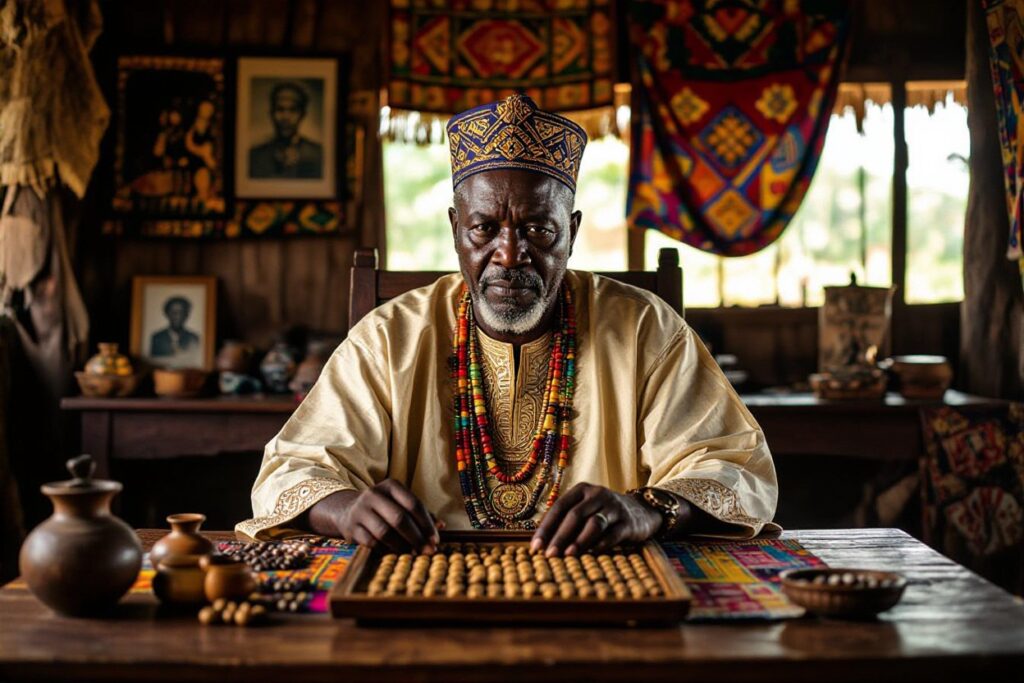
Ifa is both a divination system and a living corpus of oral literature centered on the deity Orunmila; you encounter it through the 256 Odù — the canonical signatures that structure advice, law, and moral narratives. Practitioners known as babalawos use ikin (sacred palm nuts) or the opele chain to elicit verses, and those verses direct decisions from childbirth naming to conflict resolution. When you consult Ifa, you are not just receiving a prediction but engaging with a mapped ethic and remedy set that includes prescribed sacrifices, herbal therapies, and social reparations.
Because Ifa operates as community governance as much as theology, your interactions with it carry real-world consequences: rulings can determine land disputes, marriage terms, and medical referrals in places where formal institutions are weak. Anthropological studies show how Ifa serves as a parallel legal and health system in parts of southwestern Nigeria; for example, local courts often defer to babalawo testimony in village disputes, and healers trained within Ifa materia medica treat conditions with documented herbal protocols.
Ifa emerged from the Yoruba cultural matrix in what is now southwestern Nigeria and neighboring Benin and Togo, evolving over at least a millennium through oral transmission, mnemonic poetry, and apprenticeship. Scholars such as Wande Abimbola have mapped how the 16 principal Odù expand combinatorially into 256 distinct signs, preserving diagnostic narratives and prescriptions; when you study those verses, you see a deliberate system of memory techniques, including formulaic refrains and call-and-response performance that allow precise recall across generations.
During the transatlantic slave trade (roughly the 16th–19th centuries, when about 12.5 million Africans were transported), Ifa was carried to the Americas by people from the Bight of Benin and adjacent regions, where Yoruba-speaking populations were concentrated. In your reading of diasporic practice, you find clear case studies: Cuba’s Lucumí houses, Brazil’s Candomblé Ketu terreiros, and parts of Trinidad preserved Ifa elements, often through syncretism with Catholic saints and covert ritual practice; these adaptations kept the core 256 Odù framework intact while changing ritual forms to survive under enslavement and colonial suppression.
A more detailed study shows how oral codification and institutional apprenticeship protected Ifa’s integrity: initiation into the babalawo order requires years of memorizing Ese Ifa, ritual competence, and ethical accountability to lineage elders. You can trace modern revival and scholarship to figures like Wande Abimbola, whose translations and academic work in the 1970s helped open Ese Ifa to comparative study, and to field archives that digitize verses for community use. At the same time, note that misinterpretation or fraudulent claims by uninitiated actors can produce harm—socially and economically—so assessing lineage, training, and community recognition is often as important as the text itself.
You can trace Ifa’s formal structure to the Yoruba oral corpus centered on Orunmila and the canonical set of 256 odù, a mnemonic architecture that organizes divination, cosmology, and social law. Archaeological layers at Ile‑Ife show urban complexity from roughly the 11th–15th centuries CE, and you’ll notice that this timeframe aligns with the consolidation of priestly lineages and the ritual language that codified Ese Ifá (verses) transmitted by Babalawos.
You should note how technique and technology—palm kernels (ikin), the opele chain, and the recitation of ese—function together as an embodied archive: the 256 odù expand into thousands of verses that practitioners adapt to circumstance, so your understanding of origins must account for both fixed structure and continual oral innovation.
You will find the heartland of Ifa in Yorubaland—southwestern Nigeria and adjacent parts of Benin and Togo—with ceremonial and scholarly centers in Ile‑Ife and Oyo that anchored clerical training and lineage memory. Coastal and inland trade corridors concentrated populations and facilitated ritual exchange, so Ifa’s formal vocabulary and rites crystallized in an environment of dense urban and courtly patronage.
You also need to factor in forced dispersion: between the 16th and 19th centuries roughly 12 million Africans were trafficked across the Atlantic, many taken from the Bight of Benin and surrounding regions where Yoruba identity and Ifa practice were strong; this demographic movement exported practitioners, symbolic forms, and ritual know‑how to the Americas, where they were preserved, concealed, and transformed.
You should observe how Ifa absorbed and influenced neighboring systems—Fon and Ewe Vodun, Edo court cults, and local secret societies—producing hybrid liturgies and pantheons across West Africa. In places like Benin, Fon priests integrated Ifa divination into Vodun practice, while in coastal trade towns, Ifa vocabulary mixed with multilingual repertoires, so you find local variants of oracular technique and deity names.
You will see the imprint of colonialism and missionary pressures shaping practice: sustained suppression pushed Ifa into private and syncretic forms, which in turn enabled survival in diaspora communities where ritual language blended with Spanish, Portuguese, and local creoles. The result is that Ifa’s canonical 256 odù remain recognizable, even as their Ese are reinterpreted for urban healing, legal arbitration, and social cohesion in places like Cuba and Brazil.
You can study concrete examples: in Cuba, practitioners known as Babalawos preserved Orunmila under the Lucumí label (often calling him Orula), maintaining core divination techniques while adapting offerings and saint correspondences; in Brazil’s Candomblé Ketu communities around Salvador, Ifa verses are sung in Yoruba-derived liturgical registers that tie agrarian rites to urban religious economies, demonstrating how Ifa’s frameworks were both resilient and vulnerable under transatlantic pressures.

As Ifá moved across the Atlantic with an estimated 12.5 million Africans trafficked between the 16th and 19th centuries, you can trace its lines in port cities such as Salvador (Bahia), Havana, and Port of Spain, where Yoruba-speaking captives were concentrated. Colonial records and oral histories show that hundreds of Yoruba lineages arrived in Brazil and Cuba, and you’ll find their imprint in the terreiros and casas that preserved divination chants, ritual songs, and the role of the babalawo even under conditions of forced conversion and plantation violence.
Over time, Ifá adapted without losing its core methods: the mnemonic verse corpus, the use of divination chains (opele), and the interpretive logic of Ọ̀rúnmìlà. In the 19th and 20th centuries, you see clear case studies — Candomblé Ketu in Bahia conserving Ifá liturgy in Portuguese, and Cuban Lucumí communities protecting Orunmila as Orula while disguising ritual meanings under Catholic iconography. Scholarship and migration in the late 20th century then enabled cross-Atlantic reconnection, so your contemporary Ifá networks now include both Afro-Latin terreiros and Yoruba houses in Lagos and the diaspora.
Local materials and colonial contexts forced innovation: when the traditional Opele or ikin were unavailable, practitioners in the Americas often used locally available seeds, stones, or cowrie shells and adapted the performative grammar to new instruments. For example, in Cuban Santería, the dilogún (cowrie-shell divination) became widespread alongside Ifá, so you’ll observe hybrid divination repertoires where Orunmila’s logic informs readings delivered through different mediums.
Urbanization also reshaped ritual space. You can see this in Salvador’s terreiros that moved from rural plantations into dense urban neighborhoods, transforming initiation schedules, charity roles, and economic networks. In North American cities since the 1970s, immigrant babalawos founded casas for Ifá initiation and public rites, creating visible transnational lineages that link your local practitioner to elders in Ile Ife and Ketu through pilgrimages and digital exchange.
In Cuba, the Regla de Ocha (Santería) provides the clearest example: Orunmila becomes Orula, and many ritual actions — divination, initiation, sacrificial protocols — bear Ifá’s imprint even when performed under a syncretic Catholic exterior. If you attend ceremonies in Matanzas or Havana, you’ll notice Batá drumming, the use of palm oil and kola-type offerings, and a priesthood structure that parallels Yoruba hierarchies, with babalawos acting as herbalists, judges, and community mediators.
Across the anglophone Caribbean, influences are subtler but persistent: Trinidad’s Orisha movement and the Shango cult institutionalize Ifá-derived divinatory logic alongside Kongo and Akan elements, and in Puerto Rico, you can find casas where Orishas are invoked through Spanish-language hymnody. When you map rituals island by island, patterns emerge — shared chants, comparable initiation sequences, and cross-island clergy networks that kept knowledge alive despite colonial policing.
More specifically, you can point to documented instances where Cuban babalawos in the early 20th century trained younger priests who later migrated to New York and Miami, establishing clinics that combined Ifá diagnosis with herbal therapy; that continuity explains why contemporary Caribbean diasporas still turn to Ifá-trained practitioners for healing, conflict resolution and lifecycle rites, making the system both a spiritual and social safety net for your communities.
You can see how the living nature of Ifa depends on oral transmission: Babalawos and elders pass down a corpus of verse, ritual formulae, and interpretive frameworks that were never codified in a single original text. The system rests on mnemonic devices—repetition, metric verse, drum patterns, and embodied performance—so practitioners routinely memorize and perform the 256 Odù and their associated narratives, proverbs, and prescriptions. That dense web of memory allows you to recover legal precedents, genealogies, and ethical guidance from a single chant or divinatory session.
When chains of transmission were broken by slavery, colonial suppression, or urban migration, you can trace both loss and adaptation across the diaspora. In Cuba’s Lucumí and Brazil’s Candomblé communities, for example, ritual specialists modified recitation patterns and integrated local languages to keep Ifa intelligible under surveillance, while in Nigeria and Benin, you still find multi-decade apprenticeships that preserve lineages of interpretation. Those contrasts show how oral practice is simultaneously resilient and vulnerable: the same flexibility that preserves Ifa under pressure also risks fragmentation when apprenticeships lapse.
Stories in Ifa function as portable law and philosophy: a single myth about Orunmila advising a king or Eshu’s trickery encodes governance models, conflict resolution tactics, and ethical boundaries you can apply in a divinatory reading. Performance matters; storytellers use fixed motifs and variable details so you can map a myth’s template onto a contemporary problem, making the myth a living interpretive tool rather than a static fable. For instance, parables associated with particular Odù often include concrete prescriptions—offerings, taboos, numerical counts for rites—that you will recognize and deploy during consultations.
Oral myths also carry forensic value. Anthropologists and field researchers have documented how variant tellings reveal migration routes and contact zones: a Yoruba myth with a Mandé motif in coastal Ghana signals historical exchange, while particular refrains retained in New World Ifa liturgies pinpoint port-of-origin communities. Those cross-references help you reconstruct diasporic linkages and date certain cultural syncretisms, offering measurable anchors in an otherwise fluid oral archive.
Griots (jeli/jali and analogous roles across West Africa) act as the institutional memory for Ifa-adjacent knowledge, serving as genealogists, praise-singers, and mediators who keep social histories available to diviners and community leaders. You’ll find that a trained griot preserves lineages and ceremonial repertoires through performance, often specializing in the histories of specific families or towns; this specialization lets you connect a divination’s mandates to verifiable ancestral claims. In many regions apprenticeship lasts multiple years, during which you absorb not just songs but the socio-political contexts that make those songs meaningful.
Practically speaking, griots also stabilize oral transmission in moments of disruption: when migration scatters a community, a griot’s repertoire can re-anchor identity through praise-lists and origin myths that new generations recognize. Field studies show that where professional praise-singers remain active, you are more likely to encounter intact ritual protocols and fuller collections of Odù narratives—evidence that the griot system functions as an active conservator of Ifa’s social matrix. That role can be positive for cultural continuity but also dangerous if monopolized, since control of history can translate into political power within a community.
Technically, griots use precise mnemonic structures—refrains, fixed epithets, metric counts tied to drum phrases—that enable the retention of thousands of lines of verse across generations. When you listen to a performance, the interplay of voice, instrument, and audience response is not decorative; it is a functional memory device: repetition, call-and-response, and melodic hooks embed sequence and association so that even fragmented communities can reliably reconstruct ritual procedures and genealogical records. That procedural encoding is why the 256 Odù and their voluminous commentaries survive in oral form despite centuries of displacement.
You encounter Babalawos and Iyanifas who blend centuries-old apprenticeship models with digital tools: many now combine the memorization of the 256 Odu corpus with online archives, recorded chants, and video consultations. In Lagos and Ile-Ife, traditional training still requires years of mentorship and initiation rites, while in Salvador, Bahia, and Havana, terreiros adapt Ifa divination to urban parish life, so you’ll see elders reciting Odu alongside younger initiates using smartphones to cross-reference verses.
Across diasporic centers in New York, London, and Porto Alegre, practitioners are increasingly visible in public life: you can find Ifa-led workshops in community centers, licensed ritual spaces, and interfaith panels at universities. This visibility has amplified positive developments like female ordinations as Iyanifa and the formation of formal associations that map lineages and ethical standards, yet it also creates tensions where doctrinal secrecy meets public scrutiny.
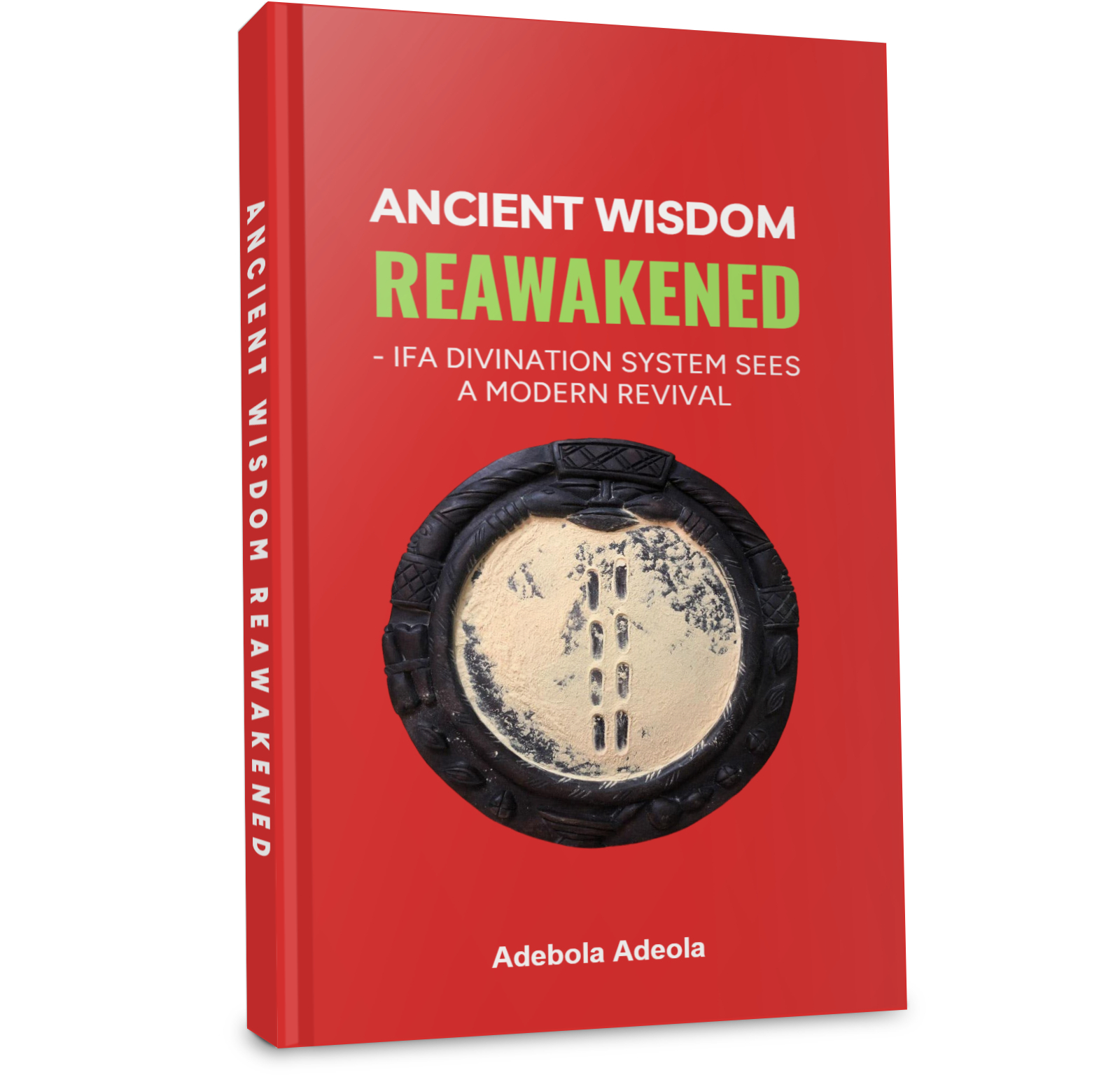
Get your copy of Ancient Wisdom Reawakened: IFA Divination System Sees a Modern Revival —
Now available in soft cover on Amazon.
Gift wisdom. Share balance. Awaken destiny.
Legal and cultural recognition has progressed unevenly: landmark cases such as Church of Lukumi Babalu Aye v. City of Hialeah (1993) affirmed First Amendment protections for Afro-Caribbean religious practices in the United States, setting a precedent that affects Ifa-derived rites when they intersect with animal sacrifice or public ritual. Museums and academic programs—in institutions ranging from the University of Ibadan to departments of religious studies in Western universities—now curate exhibitions and courses that treat Ifa as a structured cosmology rather than a folkloric spectacle.
You also notice institutional integration through health and social programs: in Brazil, some public health initiatives consult Candomblé leaders to improve community outreach in Salvador; in parts of Nigeria, traditional healers collaborate with biomedical clinics on culturally appropriate care. These collaborations produce positive outcomes in trust and patient adherence, while simultaneously exposing practitioners to regulatory frameworks and potential conflict with secular authorities.
More specifically, the diaspora’s legal victories and academic inclusion have enabled lineage registries and international conferences (for example, annual symposia in Lagos and Havana) that document ritual protocols, genealogies, and transmission methods—resources you can access to trace how Ifa has moved from household terreiros to global networks, even as debates over intellectual property, ritual secrecy, and animal welfare remain dangerous flashpoints within those exchanges.
You confront a landscape where historical suppression and modern commodification intersect: colonial-era missionaries and post-emancipation legal systems actively displaced Ifá practices, and as a result, family lineages, rites, and oral libraries were fractured. You see the aftereffects in urban centers where younger practitioners struggle to access elders’ knowledge; for example, in Brazilian and Cuban cities, entire terreiros and casas were closed or forced underground during waves of anti-African-religion policing in the 19th and 20th centuries, leaving gaps that affect authenticity and continuity today.
At the same time, public misunderstanding creates practical risks for you and your community: law enforcement actions based on sensationalized reports, tourism-driven misrepresentation, and social media distortions can lead to harassment, legal challenges, and loss of sacred objects. When ritual items are displayed or sold without context, you face both spiritual harm and tangible economic exploitation, and long-term cultural recovery requires defensive measures as well as proactive education.
You encounter appropriation in many forms — from fashion and décor using Ifá motifs to commercial “readings” offered by influencers with no initiation or lineage — and that appropriation often strips meaning from Odu verses and sacred implements. When cowrie-shell divination sets, beaded regalia, or verses are extracted from their ritual matrix and repackaged as lifestyle products, community authority and ritual integrity are undermined, and you can see the social cost as initiated elders lose economic opportunities to uncredentialed entrepreneurs.
Commercial examples are easy to find: retreats that sell an “authentic African spirituality” experience without employing trained Babalawos, and online marketplaces where mislabeled items pass as Ifá artifacts. Because this happens on platforms with global reach, you have to evaluate provenance and claims critically; unauthorized rituals and misattributed prayers can provoke backlash within diasporic communities and damage intergenerational trust.
Film and news routinely flatten Ifá into a handful of sensational tropes — witchcraft, superstition, or exotic spectacle — so when you watch mainstream portrayals, they rarely distinguish between Ifá, Candomblé, Santería, or West African vernacular practices. Hollywood examples and tabloid headlines often recycle the same imagery: masked ceremonies, “voodoo” dolls, and ominous chanting, which leads audiences to equate Ifá with danger rather than a complex moral-philosophical system; as a result, public policy and community safety decisions can be shaped by fiction rather than ethnography.
Journalistic errors intensify the problem: reporters who conflate practitioners with alleged criminality or who publish ritual details without consulting elders expose you to stereotyping and surveillance. Academic misreadings also circulate; when ethnographers publish decontextualized Odu texts or gloss over initiation protocols, policymakers and cultural institutions can misapply protections or funding, leaving you and your temple vulnerable.
More specifically, social media accelerates viral distortions — short clips of rituals devoid of explanation are shared millions of times and can trigger doxxing, harassment, or copycat behavior; you therefore see increased demand for media literacy within diasporic communities and a growing movement to produce counter-narratives led by credentialed Babalawos, documented lineages, and community archives as a way to reclaim representation and mitigate harm.
So as you trace the roots of Ifá, you connect historical, linguistic, and ritual threads that reveal how a resilient spiritual system became central to African identity and to communities across the diaspora. By engaging with oral histories, temple practices, and recorded liturgies, you gain access to living lineages that anchor Ifá’s cosmology and its adaptive transmission across continents.
You will observe how Ifá’s pedagogies, ethical codes, and social networks have been reinterpreted in new contexts while retaining core principles, enabling you to distinguish continuity from innovation. Your ongoing, respectful collaboration with practitioners and scholars will deepen your understanding and help sustain reciprocal connections between source communities and global descendants.
A: Ifa originated among the Yoruba-speaking peoples of what is now southwestern Nigeria, Benin, and Togo. Its oral corpus — the verses of Odu Ifa — and the priestly institutions around Orunmila and the Babalawo emerged over many centuries, combining cosmology, ethics, medicine, and divination. Archaeological, linguistic, and comparative religious evidence points to deep precolonial roots that were elaborated continuously through intercommunity exchange, trade networks, and regional state developments from the first millennium CE onward.
A: Ifa reached the Americas primarily through the transatlantic slave trade, when enslaved Yoruba and related peoples were transported to the Caribbean, Brazil, Cuba, and parts of the United States. Practitioners preserved elements of Ifa within enslaved communities, adapting rituals and deities to new contexts. Later migrations of West Africans and the global movement of religious knowledge in the 20th and 21st centuries further spread Ifa to Europe, North America, and beyond, where it entered dialogues with other spiritual traditions and academic study.
A: Orunmila is the divinatory deity associated with wisdom and destiny; Babalawo (male) and Iyanifa (female) are trained priests who mediate Ifa’s divination system. The Odu Ifa are the canonical verses and narrative seeds used in divination; there are 256 major Odu and many subsidiary signs. Priests use palm kernels, the divination chain (opele), or ikin to elicit Odu patterns and recite associated verses to diagnose situations, prescribe rituals, herbal remedies, and life guidance.
A: In the diaspora, Ifa elements combined with Roman Catholic symbols, indigenous American practices, and other African religious inputs, producing syncretic systems. In Cuba, for example, Ifa’s divinatory framework coexisted with oricha-centered practices in Lukumi (Santería); in Brazil, Yoruba-derived orixás were integrated into Candomblé with local adaptations. These transformations involved selective retention of liturgy, ritual structure, and herbal knowledge, as well as reinterpreting deities and rites to survive under colonial and plantation regimes.
A: A divination session begins with invocation, cleansing, and establishing a council between the client and the priest. The priest casts the divination instrument to produce an Odu pattern, interprets the associated verses, and prescribes an eti (ritual offering, sacrifice, herbal treatment, or life adjustment). Issues addressed include health, family matters, conflicts, vocational decisions, spiritual affliction, and community concerns. Complexity varies from a single verse reading to multiple rounds with ritual interventions.
A: Preservation relied on oral transmission within families and guilds, coded language, ritual secrecy, and adaptive strategies such as public Catholic masking or migration to remote areas. Lineage-based training, maternal and paternal transmission of songs and medicines, and networks of priestly apprenticeship sustained practice. In the 20th century, written compilations, recordings, institutional temples, and international conferences strengthened transmission and facilitated cultural exchange between homeland and diaspora communities.
A: Approach with cultural sensitivity and respect for confidentiality and ritual boundaries. Prioritize primary sources produced by Yoruba and diaspora practitioners: recorded oral corpus, practitioner-authored books, ethnographies that center practitioner voices, and publications from recognized temples or councils. Consult academic works in anthropology, history, and religious studies for contextual analysis. When participating in rituals, seek explicit permission, follow host guidance, and support community-led initiatives that pay practitioners for knowledge and services.