








Empower your potential with Skill Training Programs—transforming knowledge into mastery through practical, spiritually inspired, and industry-relevant courses designed to elevate careers, leadership, and purpose.


There’s a living tradition in Ifa that shows you how to align daily choices with ancestral insight. By applying its divinatory patterns, you gain practical guidance for decision-making, cultivate ethical balance amid technological pace, and build community resilience, while avoiding the dangers of spiritual disconnection and its social fallout. Ifa offers rites, proverbs, and rituals that orient your purpose, sharpen your discernment, and restore meaning so you can navigate modern pressures with clarity and rooted authority.
You encounter Ifa as a practical, structured system that maps life into patterns you can work with; the corpus centers on 256 Odu and thousands of associated verses that you consult through divination tools such as the opele chain or ikin palm nuts. In everyday terms, that means when you bring a question—about career shifts, relationships, health, or community decisions—a trained Babalawo or Iyanifa interprets a specific Odu and prescribes remedies, stories, and actions that tie your present choices to ancestral patterns.
Those prescriptions include ethical directives, herbal regimens, symbolic acts, and sometimes offerings that aim to restore balance between intention and circumstance; the net effect for you is a blend of foresight and practical steps. Because Ifa links personal destiny to communal well-being, you use it not only to solve immediate problems but to align with your Ori—your inner destiny—and harness Ase, the creative power that carries intentions into reality, while being alert to the risk of misinterpretation or exploitative practitioners.
Originating in the Yoruba heartland of southwestern Nigeria, Benin, and Togo, Ifa developed over centuries as an oral and ritual tradition carried by lineages of diviners; you can trace its social codification into organized Babalawo guilds by the late precolonial era. During the transatlantic slave trade, practitioners and fragments of Ifa were carried to Brazil, Cuba, and the Caribbean, where the tradition syncretized into systems like Candomblé and Lucumí/Regla de Ifá and continues to influence millions in the diaspora.
In the modern period, Ifa adapted to urban life and literate contexts: scholars and initiates began documenting Odu narratives in the 19th and 20th centuries, and you now find written commentaries, audio recordings, and formal schools alongside the oral lineage model. That dual presence—oral transmission plus documented corpus—means you can access Ifa knowledge in community shrines, private consultations, or published collections, but authentic interpretation still depends on lineage training and depth of practice.
At the center of Ifa practice, you encounter a few interlocking principles: Ori (inner destiny), Ase (the spiritual force to enact change), divination as a diagnostic mirror, and the ethic of balance between personal effort and inherited patterns. For example, a single Odu reading may recommend both a behavioral change—how you handle a business partnership—and a remediation such as an offering or herbal regimen; this combination shows how Ifa integrates psychology, cosmology, and practical medicine into one protocol.
Applied routinely, these principles help you sequence decisions: first diagnose via divination, then enact concrete remedies, and finally maintain alignment through rites or community obligations. That sequence reduces randomness in decision-making—one study of Yoruba urban communities found that up to 60% of small-business owners consult traditional diviners before major investments—while also exposing you to possible harms if remedies are misapplied or if you rely solely on a practitioner who lacks ethical grounding.
Delving deeper, Ase functions as both empowerment and constraint: it permits transformation but demands correct ritual form and intention, so you should verify a practitioner’s lineage, techniques, and track record before following costly prescriptions; misuse of ritual—whether coercive promises or unsafe herbal dosages—can produce social and physical harm, while properly administered guidance often yields measurable improvements in conflict resolution, mental clarity, and community cohesion.
Ifa divination becomes a daily governance tool when you treat it as decision support rather than fate. Practitioners consult Ifa for concrete choices—starting a business, timing a wedding, diagnosing recurring illness—and for ongoing household rhythms like planting cycles or travel plans. The system rests on 256 Odu and the interplay of those verses with your circumstances, so a single reading can map out steps spanning weeks or years; for example, an Odu may advise postponing an investment for exactly three months while recommending specific protective actions in the interim. In modern settings, you’ll see entrepreneurs in Lagos, farmers in Osun, and municipal officials alike using Ifa readings to align timing, risk management, and community obligations with spiritual insight.
Because Ifa ties ritual prescriptions to practical outcomes, you’ll often find a mix of spiritual and material recommendations in a session—legal counsel, market strategy, herbal regimens, or reparation to a relationship. Consultations vary in frequency: some people check in weekly or before every major move; others schedule a deep consultation annually. The net effect is that Ifa functions as both a predictive medium and an adaptive planning system, offering guidance that is actionable but also demanding of ethical and legal judgment.
You’ll most commonly encounter two technical methods: the use of ikin (16 palm nuts) for a full, canonical reading and the opele chain (an 8‑segment divination chain) for faster diagnostics. The ikin process involves repeated casting and the opón Ifa (divination board) to establish Odu; the Babalawo then recites the Ese associated with that Odu. Functionally, the ikin session is deeper and can take 30–90 minutes, while an opele reading is quicker and more suitable for routine checks or follow‑ups.
Besides tools, the method includes collateral practices: you’ll often provide relevant personal details, a Babalawo will ask targeted questions, and the reading may conclude with prescribed offerings, herbal treatments, or behavioral adjustments. Be aware that some prescriptions historically involve animal offerings or intense rites; those elements are dangerous if handled without legal, ethical, and sanitary safeguards, so you should confirm the scope and risks before agreeing to any ritual act.
When the Odu is identified, the diviner overlays the canonical Ese—stories, aphorisms, and precedents—onto your situation to produce a tailored interpretation you can act on. You’ll receive a blend of diagnostic statements (what is causing the issue), prescriptive steps (what to do next), and preventive measures (how to avoid recurrence). For instance, an Odu might prescribe a sequence: perform a small offering within 7 days, change the location of a storefront within 30 days, and adopt a specific cleansing regimen twice weekly; such granular timelines are common and intended to translate spiritual counsel into measurable actions.
Interpretation is not rote recitation. You’ll notice experienced Babalawos integrate contemporary considerations—financial contracts, medical referrals, and legal risks—into the Ese framework, converting symbolic language into modern directives. That means the same Odu can yield different prescriptions depending on whether you’re a student, a business owner, or a parent; your context, the diviner’s training, and the consultation history all shape the final message. Misreading or oversimplifying verses is a real hazard, so verify that explanations include clear, practical steps and contingencies.
For more assurance, ask about follow‑up: many practitioners recommend a recheck after a set period—commonly one to three months—to monitor outcomes and adjust recommendations. Fees for consultations vary widely by region and complexity (from modest community rates to higher urban fees), and you should expect confidentiality and transparency about any proposed rituals. The most effective interpretations combine the Odu’s guidance with verifiable action items and ethical safeguards, offering both spiritual insight and practical accountability.
Ifa’s system gives you a structured mirror for inner work: the 16 principal Odu and their 256 permutations act as a nuanced vocabulary for patterns of thought, habit, and destiny. By treating an Odu revelation like a behavioral diagnosis, you can translate poetic prescriptions into measurable practices — for example, committing to a 30-day journaling cycle after a reading, tracking triggers, and noting shifts in mood or choices in a simple spreadsheet. Many practitioners pair Ifa counsel with modern tools (habit trackers, weekly review templates) to convert insight into progress you can quantify.
For measurable growth, you typically align goals with cyclical rhythms in Ifa: short experiments of 30–90 days map neatly onto the Odu’s advice and let you test changes without overcommitting. When you combine divination guidance with clear metrics (revenue targets, time spent on skill practice, number of social interactions), Ifa moves from prophecy into practical coaching — accelerating personal learning while reducing costly, repeated mistakes.
When you sit for an Ifa consultation, it often surfaces recurrent behaviors—procrastination, avoidance, or patterns of relational friction—framed through stories and proverbs that point to root attitudes (Iwa). Practically, you can extract two to three behavioral themes from a reading and design micro-experiments: a 5-minute morning reflection, a weekly boundary-setting protocol, and a 30-day feedback log where you rate incidents on a 1–5 scale. Over 90 days, those simple metrics reveal whether the insight from the Odu actually shifts your day-to-day choices.
By converting Odu prescriptions into concrete practices, you also sharpen emotional intelligence: tracking triggers after a reading trains you to notice impulses before you act, while reciting targeted verses or proverbs provides a cognitive anchor during stress. Use the Opele or ikin reading as a checkpoint — schedule follow-ups at 14 and 60 days to compare your logs to the original guidance and adjust your plan based on measurable change.
Ifa refines decision-making by surfacing hidden variables and offering narrative frameworks for possible outcomes; the 256 Odu combinations give you a granular map of tendencies rather than a single binary answer. You can use a reading to enumerate risks and benefits, then convert those into concrete scenarios—best-case, worst-case, and most-likely—assigning approximate timelines and resources to each. For example, when weighing a career change, you might set a 6-month pilot project, with weekly KPIs and a mid-point Ifa check to recalibrate.
When you integrate Ifa with rational decision tools, it improves both speed and quality: you retain agency while tapping traditional pattern recognition to identify blind spots. In practice, extract 2–3 actionable recommendations from a reading, assign numeric targets (sales, hours practiced, savings), and run a 90-day experiment; this method reduces decision paralysis and transforms spiritual counsel into operational steps. Note that overreliance on divination without personal accountability can create passivity, so balance ritual insight with measurable action — overdependence on readings is a real risk.
More specifically, adopt a 3-step Ifa decision protocol: (1) obtain a focused Odu reading that frames the problem, (2) distill 1–3 concrete actions with clear metrics and timeboxes (14‑day check, 90‑day outcome), and (3) schedule a follow-up divination to interpret results and iterate. Using this loop, you turn Ifa into a practical decision engine: narrative insight guides hypothesis formation, measurable experiments test those hypotheses, and subsequent readings refine strategy based on observed outcomes.
You can use Ifa divination to map compatibility and patterns: a Babalawo reads one of the 256 Odu to identify recurring relational dynamics, then translates that template into practical steps—communication rituals, scheduled listening sessions, or specified household duties—to rebalance the relationship. Typical consultations last 60–90 minutes, and many practitioners pair the reading with a tailored daily practice (commonly a 21-day rite or set of micro-habits) that you and your partner commit to, which anchors spiritual insight in measurable behavior change.
Rather than leaving interpretation abstract, Ifa often prescribes concrete tasks: shared offerings to an Orisha as a symbolic recommitment, a finance-sharing plan with weekly check-ins, or a sequence of apology-and-repair actions laid out by the diviner. When you follow these prescriptions, the work is both spiritual and managerial—ancestors and ritual seal intention, while clear steps establish accountability and produce observable results over 6–12 weeks.
When conflict escalates, Ifa treats the disagreement like a symptom: the Babalawo identifies root causes within a specific Odu and recommends remedies that blend symbolism and practicality. For example, a reading might point to obstructive pride and prescribe an offering plus a mediation process led by a neutral elder; in practice, this can look like a structured reconciliation meeting, a written restitution plan, and a short-term behavioral contract you both sign. Such processes prioritize de-escalation, explicit restitution, and community witness to reinforce repair.
You should expect a stepwise pathway: first obtain a divination to diagnose the pattern, then implement the prescribed ebo or symbolic act, and finally adopt the behavioral prescriptions—daily apologies, financial transparency, or shared service—that the diviner sets out. Many Babalawos recommend pairing ritual remedies with concrete timelines (for instance, weekly check-ins for three months) so changes are trackable and both partners can evaluate progress with measurable markers.
Additional context matters: practitioners in urban diasporic communities often integrate Ifa remedies with counseling, legal agreements, or family mediation to address complex issues like custody or business disputes. Pay attention to authority roles too—an Iyanifa or Babalawo may mediate differently—so choose someone whose method aligns with your goals, and be aware that ignoring prescribed actions can prolong conflict while consistent follow-through typically produces the most reliable resolution.

You see, Ifa operates as a practical social infrastructure: Babalawos and elders mediate disputes, coordinate mutual-aid associations, and organize rites that bind neighborhoods. In many Yoruba towns, an Ile Ifa serves as a hub where rotating savings clubs and funeral associations (egbe) meet weekly; these groups commonly consist of 20–50 members pooling resources to cover weddings, funerals, and emergencies, which reduces reliance on costly formal services. The patterning of the 16 principal Odu and their 256 permutations gives you a reproducible framework for rites of passage and dispute protocols, so community responses are predictable and widely understood.
When tensions rise, you’ll find that Ifa-based councils often defuse conflicts before they enter the courts: elders apply dialectical readings of Odu, recommend reparations or public rituals, and set timelines for reconciliation. Apprenticeship systems also provide a safety valve—young people who train under a Babalawo gain social capital, vocational skills, and a place in communal decision-making; these apprenticeships frequently last 3–7 years and create multi-generational bonds that stabilize neighborhoods. At the same time, be aware that misinterpretation of divination can inflame a dispute if leaders lack accountability—so the presence of ethical guidelines or written norms is one of the most positive safeguards you can advocate for.
You encounter cultural preservation through both oral transmission and institutional work: the Ifa corpus of 256 Odu remains central to teaching, and scholars such as Wande Abimbola have translated and codified many verses to make them accessible beyond oral lines. Digitization efforts and community-led archives now aim to safeguard chants, drum patterns, and genealogies; these projects preserve material that otherwise risks erosion under urban migration and language shift. The Osun-Osogbo Sacred Grove—which is a UNESCO World Heritage site—illustrates how ritual landscapes attract attention and funding, drawing tens of thousands of visitors during festivals and reinforcing local commitment to safeguarding tradition.
On the advocacy front, you’ll notice Ifa communities lobbying for legal recognition, religious freedom, and protection against cultural appropriation. Diaspora terreiros in cities like Havana, Salvador de Bahia, London, and New York run educational programs and public ceremonies that reach hundreds to thousands annually, and they often partner with universities or cultural NGOs to document practices. Those collaborations increase visibility but also create tension: as you promote access, you must guard against commodification and the extraction of sacred knowledge without consent—this is one of the most dangerous threats to living tradition.
Beyond ceremonies and archives, you can support preservation by backing curriculum initiatives and local festivals that link heritage to livelihoods: cultural tourism around sacred groves and annual festivals provides revenue streams for maintenance, while formalized apprenticeship certificates and community bylaws protect pedagogical integrity. When you leverage both protection (legal and communal) and promotion (education and tourism), the Ifa tradition is more likely to remain resilient and beneficial to future generations.
You can trace Ifa’s practical reach from household routines to boardroom strategy by looking at how the system codifies choices: the corpus of 256 Odu encodes outcomes and prescriptions that are consulted through divination instruments like the Ikin (16 palm nuts) or the Opele chain. Practitioners often consult Ifa before major life events—marriage, relocation, business launches—and use its guidance to design mitigation steps, offerings, or behavioral changes; this transforms abstract advice into concrete, timed actions. At scale, communities rely on Ifa to resolve disputes and allocate resources, which demonstrates how an oral-liturgical system functions as a governance and mental-health tool when integrated into daily life.
Where Ifa is applied regularly, you will see structured schedules: weekly divination check-ins, monthly altar maintenance, and ritualized offerings tailored to specific Odu prescriptions. Those practices create feedback loops—divination recommends an action, you implement it, outcomes inform future consultations—which increases adaptive capacity in uncertain environments. Be aware that misapplied divination or guidance from untrained sources can produce harm; seeking accredited Babalawo or verified community elders reduces the risk of misinterpretation.
You can anchor your day with short, repeatable rituals that keep Ifa’s logic present: a morning libation to Ori and Eshu, lighting a candle at your altar, and offering a small food item like kola or honey after a brief reflection on intention. Divination need not be daily, but a five- to ten-minute check-in—clearing the altar, arranging consecrated objects, or reciting a remembered ese (poem)—creates continuity and keeps your decisions aligned with the patterns Ifa highlights.
For practical cleansing and focus, many urban practitioners use herbal baths (bitter leaf, palm kernel infusions) and incense to mark transitions between work and home life; these are complemented by scheduled consultations: for example, a quarterly full divination session with a certified Babalawo for life-planning, and shorter monthly altar reviews you perform yourself. Neglecting proper lineage-based initiation and training when performing advanced rites can be dangerous, so you should limit unsupervised ritual experimentation and consult experienced practitioners for complex prescriptions.
You can integrate Ifa into professional decision-making by treating divination as one data point among many: consult Ifa before signing major contracts, then map its recommendations onto quantitative risk assessments, project timelines, and stakeholder analyses. Examples include entrepreneurs in Lagos and Salvador who schedule a divination before product launches and combine Ifa guidance with market research; the practice helps them design contingency plans and community-engagement strategies that reduce reputational risk and improve uptake.
In daily urban contexts, Ifa adapts through syncretic practices and technology: diaspora communities in Brazil and Cuba have long blended Ifa with local customs to maintain social cohesion, while contemporary practitioners use secure remote consultations and digital case notes to track spiritual prescriptions alongside therapy or coaching plans. This hybrid approach lets you preserve lineage integrity while leveraging modern tools for documentation and accountability; the positive outcome is better follow-through and measurable behavioral change.
More specifically, you should establish protocols: vet practitioners by lineage and referrals, document divinatory prescriptions in writing with dates and responsible parties, and schedule follow-ups at 30-, 90-, and 180-day intervals to evaluate impact. Doing so creates empirical records you can analyze—showing, for instance, whether certain offerings or behavioral adjustments correlate with improved business stability or family harmony—and helps guard against unscrupulous actors; failure to document or to verify credentials increases exposure to fraud and harmful advice.
With these considerations, you can see how Ifa wisdom offers a living framework that grounds your decisions, clarifies your responsibilities, and reconnects you to ancestral and natural rhythms. By emphasizing balance, ethical action, and careful discernment through divination and ritual, Ifa gives you practical tools to navigate uncertainty and integrate meaning into daily life.
Applying Ifa teachings requires attentive practice: consult knowledgeable elders, engage with the Odu narratives that speak to your circumstances, cultivate disciplined ritual and ethical habits, and align your choices with communal and ecological well-being. In doing so, you strengthen your sense of purpose, deepen your relationships, and bring a measured, spiritually informed orientation to modern challenges.
A: In Ifa, the Source refers to Olodumare or Orunmila as the divine origin of creation, wisdom, balance, and destiny. For modern life, this concept invites a shift from purely material aims to a worldview that values interconnectedness, ethical responsibility, and long-term well-being. Applying the Source means aligning choices with principles of harmony, purpose, and communal good rather than short-term gain.
A: Ifa emphasizes deliberation, consultation, and divination to clarify paths and consequences. Techniques include dialogue with elders, reflective meditation on odù teachings, and using divination as a structured method to surface hidden factors and moral considerations. These practices cultivate patience, perspective, and a habit of weighing long-term outcomes before acting.
A: Daily habits include offerings or small rituals to acknowledge gratitude, recitation of proverbs and verses to center the mind, regular prayer or meditation to create pause, and communal sharing to reduce isolation. Such practices build resilience, reduce anxiety by restoring a sense of meaning, and strengthen social bonds that support emotional health.
A: Ifa teaches integrating vocation with purpose and ethics: pursuing competence, honesty, and service while considering how one’s work affects family and community. Guidance from odù can reveal gifts and obstacles, suggesting approaches to develop skills, set boundaries, and balance ambition with social obligations. It encourages practical planning alongside spiritual alignment.
A: Approach with humility, seek learning from accredited practitioners and community elders, ask permission before participating in rites, avoid publicizing sacred formulas or objects, and support institutions led by practitioners of the tradition. Prioritize relationship-building, give proper credit, and be mindful of power imbalances when applying teachings outside their original context.
A: Ifa teachings emphasize balance between humans and nature, the moral value of reciprocity, and the responsibilities of lineage and community. Practically, this translates into sustainable land use, respect for local ecosystems, rituals of thanksgiving to natural forces, and cooperative community projects that share resources and protect common goods.
A: Integration works by focusing on shared values—ethical behavior, service, reflection—and using Ifa’s methods (consultation, storytelling, proverbs) alongside meditation, counseling, or professional planning. Seek compatibility rather than fusion: maintain transparency about sources of guidance, retain respect for core Ifa protocols, and consult knowledgeable practitioners when combining rites or formal divination with other systems.
There’s a living tradition in Ifa that shows you how to align daily choices with ancestral insight; by applying its divinatory patterns, you gain practical guidance for decision-making, cultivate ethical balance amid technological pace, and build community resilience, while avoiding the danger of spiritual disconnection and its social fallout. Ifa offers rites, proverbs, and rituals that orient your purpose, sharpen your discernment, and restore meaning so you can navigate modern pressures with clarity and rooted authority.

You encounter Ifa as a practical, structured system that maps life into patterns you can work with; the corpus centers on 256 Odu and thousands of associated verses that you consult through divination tools such as the opele chain or ikin palm nuts. In everyday terms, that means when you bring a question—about career shifts, relationships, health, or community decisions—a trained Babalawo or Iyanifa interprets a specific Odu and prescribes remedies, stories, and actions that tie your present choices to ancestral patterns.
Those prescriptions include ethical directives, herbal regimens, symbolic acts, and sometimes offerings that aim to restore balance between intention and circumstance; the net effect for you is a blend of foresight and practical steps. Because Ifa links personal destiny to communal well-being, you use it not only to solve immediate problems but to align with your Ori—your inner destiny—and harness Ase, the creative power that carries intentions into reality, while being alert to the risk of misinterpretation or exploitative practitioners.
Originating in the Yoruba heartland of southwestern Nigeria, Benin, and Togo, Ifa developed over centuries as an oral and ritual tradition carried by lineages of diviners; you can trace its social codification into organized Babalawo guilds by the late precolonial era. During the transatlantic slave trade, practitioners and fragments of Ifa were carried to Brazil, Cuba, and the Caribbean, where the tradition syncretized into systems like Candomblé and Lucumí/Regla de Ifá and continues to influence millions in the diaspora.
In the modern period, Ifa adapted to urban life and literate contexts: scholars and initiates began documenting Odu narratives in the 19th and 20th centuries, and you now find written commentaries, audio recordings, and formal schools alongside the oral lineage model. That dual presence—oral transmission plus documented corpus—means you can access Ifa knowledge in community shrines, private consultations, or published collections, but authentic interpretation still depends on lineage training and depth of practice.
At the center of Ifa practice, you encounter a few interlocking principles: Ori (inner destiny), Ase (the spiritual force to enact change), divination as a diagnostic mirror, and the ethic of balance between personal effort and inherited patterns. For example, a single Odu reading may recommend both a behavioral change—how you handle a business partnership—and a remediation such as an offering or herbal regimen; this combination shows how Ifa integrates psychology, cosmology, and practical medicine into one protocol.
Applied routinely, these principles help you sequence decisions: first diagnose via divination, then enact concrete remedies, and finally maintain alignment through rites or community obligations. That sequence reduces randomness in decision-making—one study of Yoruba urban communities found that up to 60% of small-business owners consult traditional diviners before major investments—while also exposing you to possible harms if remedies are misapplied or if you rely solely on a practitioner who lacks ethical grounding.
Delving deeper, Ase functions as both empowerment and constraint: it permits transformation but demands correct ritual form and intention, so you should verify a practitioner’s lineage, techniques, and track record before following costly prescriptions; misuse of ritual—whether coercive promises or unsafe herbal dosages—can produce social and physical harm, while properly administered guidance often yields measurable improvements in conflict resolution, mental clarity, and community cohesion.
Ifa divination becomes a daily governance tool when you treat it as decision support rather than fate. Practitioners consult Ifa for concrete choices—starting a business, timing a wedding, diagnosing recurring illness—and for ongoing household rhythms like planting cycles or travel plans. The system rests on 256 Odu and the interplay of those verses with your circumstances, so a single reading can map out steps spanning weeks or years; for example, an Odu may advise postponing an investment for exactly three months while recommending specific protective actions in the interim. In modern settings, you’ll see entrepreneurs in Lagos, farmers in Osun, and municipal officials alike using Ifa readings to align timing, risk management, and community obligations with spiritual insight.
Because Ifa ties ritual prescriptions to practical outcomes, you’ll often find a mix of spiritual and material recommendations in a session—legal counsel, market strategy, herbal regimens, or reparation to a relationship. Consultations vary in frequency: some people check in weekly or before every major move; others schedule a deep consultation annually. The net effect is that Ifa functions as both a predictive medium and an adaptive planning system, offering guidance that is actionable but also demanding of ethical and legal judgment.
You’ll most commonly encounter two technical methods: the use of ikin (16 palm nuts) for a full, canonical reading and the opele chain (an 8‑segment divination chain) for faster diagnostics. The ikin process involves repeated casting and the opón Ifa (divination board) to establish Odu; the Babalawo then recites the Ese associated with that Odu. Functionally, the ikin session is deeper and can take 30–90 minutes, while an opele reading is quicker and more suitable for routine checks or follow‑ups.
Besides tools, the method includes collateral practices: you’ll often provide relevant personal details, a Babalawo will ask targeted questions, and the reading may conclude with prescribed offerings, herbal treatments, or behavioral adjustments. Be aware that some prescriptions historically involve animal offerings or intense rites; those elements are dangerous if handled without legal, ethical, and sanitary safeguards, so you should confirm the scope and risks before agreeing to any ritual act.
When the Odu is identified, the diviner overlays the canonical Ese—stories, aphorisms, and precedents—onto your situation to produce a tailored interpretation you can act on. You’ll receive a blend of diagnostic statements (what is causing the issue), prescriptive steps (what to do next), and preventive measures (how to avoid recurrence). For instance, an Odu might prescribe a sequence: perform a small offering within 7 days, change the location of a storefront within 30 days, and adopt a specific cleansing regimen twice weekly; such granular timelines are common and intended to translate spiritual counsel into measurable actions.
Interpretation is not rote recitation. You’ll notice experienced Babalawos integrate contemporary considerations—financial contracts, medical referrals, and legal risks—into the Ese framework, converting symbolic language into modern directives. That means the same Odu can yield different prescriptions depending on whether you’re a student, a business owner, or a parent; your context, the diviner’s training, and the consultation history all shape the final message. Misreading or oversimplifying verses is a real hazard, so verify that explanations include clear, practical steps and contingencies.
For more assurance, ask about follow‑up: many practitioners recommend a recheck after a set period—commonly one to three months—to monitor outcomes and adjust recommendations. Fees for consultations vary widely by region and complexity (from modest community rates to higher urban fees), and you should expect confidentiality and transparency about any proposed rituals. The most effective interpretations combine the Odu’s guidance with verifiable action items and ethical safeguards, offering both spiritual insight and practical accountability.
Ifa’s system gives you a structured mirror for inner work: the 16 principal Odu and their 256 permutations act as a nuanced vocabulary for patterns of thought, habit, and destiny. By treating an Odu revelation like a behavioral diagnosis, you can translate poetic prescriptions into measurable practices — for example, committing to a 30-day journaling cycle after a reading, tracking triggers, and noting shifts in mood or choices in a simple spreadsheet. Many practitioners pair Ifa counsel with modern tools (habit trackers, weekly review templates) to convert insight into progress you can quantify.
For measurable growth, you typically align goals with cyclical rhythms in Ifa: short experiments of 30–90 days map neatly onto the Odu’s advice and let you test changes without overcommitting. When you combine divination guidance with clear metrics (revenue targets, time spent on skill practice, number of social interactions), Ifa moves from prophecy into practical coaching — accelerating personal learning while reducing costly, repeated mistakes.
When you sit for an Ifa consultation, it often surfaces recurrent behaviors—procrastination, avoidance, or patterns of relational friction—framed through stories and proverbs that point to root attitudes (Iwa). Practically, you can extract two to three behavioral themes from a reading and design micro-experiments: a 5-minute morning reflection, a weekly boundary-setting protocol, and a 30-day feedback log where you rate incidents on a 1–5 scale. Over 90 days, those simple metrics reveal whether the insight from the Odu actually shifts your day-to-day choices.
By converting Odu prescriptions into concrete practices, you also sharpen emotional intelligence: tracking triggers after a reading trains you to notice impulses before you act, while reciting targeted verses or proverbs provides a cognitive anchor during stress. Use the Opele or ikin reading as a checkpoint — schedule follow-ups at 14 and 60 days to compare your logs to the original guidance and adjust your plan based on measurable change.
Ifa refines decision-making by surfacing hidden variables and offering narrative frameworks for possible outcomes; the 256 Odu combinations give you a granular map of tendencies rather than a single binary answer. You can use a reading to enumerate risks and benefits, then convert those into concrete scenarios—best-case, worst-case, and most-likely—assigning approximate timelines and resources to each. For example, when weighing a career change, you might set a 6-month pilot project, with weekly KPIs and a mid-point Ifa check to recalibrate.
When you integrate Ifa with rational decision tools, it improves both speed and quality: you retain agency while tapping traditional pattern recognition to identify blind spots. In practice, extract 2–3 actionable recommendations from a reading, assign numeric targets (sales, hours practiced, savings), and run a 90-day experiment; this method reduces decision paralysis and transforms spiritual counsel into operational steps. Note that overreliance on divination without personal accountability can create passivity, so balance ritual insight with measurable action — overdependence on readings is a real risk.
More specifically, adopt a 3-step Ifa decision protocol: (1) obtain a focused Odu reading that frames the problem, (2) distill 1–3 concrete actions with clear metrics and timeboxes (14‑day check, 90‑day outcome), and (3) schedule a follow-up divination to interpret results and iterate. Using this loop, you turn Ifa into a practical decision engine: narrative insight guides hypothesis formation, measurable experiments test those hypotheses, and subsequent readings refine strategy based on observed outcomes.
You can use Ifa divination to map compatibility and patterns: a Babalawo reads one of the 256 Odu to identify recurring relational dynamics, then translates that template into practical steps—communication rituals, scheduled listening sessions, or specified household duties—to rebalance the relationship. Typical consultations last 60–90 minutes, and many practitioners pair the reading with a tailored daily practice (commonly a 21-day rite or set of micro-habits) that you and your partner commit to, which anchors spiritual insight in measurable behavior change.
Rather than leaving interpretation abstract, Ifa often prescribes concrete tasks: shared offerings to an Orisha as a symbolic recommitment, a finance-sharing plan with weekly check-ins, or a sequence of apology-and-repair actions laid out by the diviner. When you follow these prescriptions, the work is both spiritual and managerial—ancestors and ritual seal intention, while clear steps establish accountability and produce observable results over 6–12 weeks.
When conflict escalates, Ifa treats the disagreement like a symptom: the Babalawo identifies root causes within a specific Odu and recommends remedies that blend symbolism and practicality. For example, a reading might point to obstructive pride and prescribe an offering plus a mediation process led by a neutral elder; in practice, this can look like a structured reconciliation meeting, a written restitution plan, and a short-term behavioral contract you both sign. Such processes prioritize de-escalation, explicit restitution, and community witness to reinforce repair.
You should expect a stepwise pathway: first obtain a divination to diagnose the pattern, then implement the prescribed ebo or symbolic act, and finally adopt the behavioral prescriptions—daily apologies, financial transparency, or shared service—that the diviner sets out. Many Babalawos recommend pairing ritual remedies with concrete timelines (for instance, weekly check-ins for three months) so changes are trackable and both partners can evaluate progress with measurable markers.
Additional context matters: practitioners in urban diasporic communities often integrate Ifa remedies with counseling, legal agreements, or family mediation to address complex issues like custody or business disputes. Pay attention to authority roles too—an Iyanifa or Babalawo may mediate differently—so choose someone whose method aligns with your goals, and be aware that ignoring prescribed actions can prolong conflict while consistent follow-through typically produces the most reliable resolution.

You see, Ifa operates as a practical social infrastructure: Babalawos and elders mediate disputes, coordinate mutual-aid associations, and organize rites that bind neighborhoods. In many Yoruba towns, an Ile Ifa serves as a hub where rotating savings clubs and funeral associations (egbe) meet weekly; these groups commonly consist of 20–50 members pooling resources to cover weddings, funerals, and emergencies, which reduces reliance on costly formal services. The patterning of the 16 principal Odu and their 256 permutations gives you a reproducible framework for rites of passage and dispute protocols, so community responses are predictable and widely understood.
When tensions rise, you’ll find that Ifa-based councils often defuse conflicts before they enter the courts: elders apply dialectical readings of Odu, recommend reparations or public rituals, and set timelines for reconciliation. Apprenticeship systems also provide a safety valve—young people who train under a Babalawo gain social capital, vocational skills, and a place in communal decision-making; these apprenticeships frequently last 3–7 years and create multi-generational bonds that stabilize neighborhoods. At the same time, be aware that misinterpretation of divination can inflame a dispute if leaders lack accountability—so the presence of ethical guidelines or written norms is one of the most positive safeguards you can advocate for.
You encounter cultural preservation through both oral transmission and institutional work: the Ifa corpus of 256 Odu remains central to teaching, and scholars such as Wande Abimbola have translated and codified many verses to make them accessible beyond oral lines. Digitization efforts and community-led archives now aim to safeguard chants, drum patterns, and genealogies; these projects preserve material that otherwise risks erosion under urban migration and language shift. The Osun-Osogbo Sacred Grove—which is a UNESCO World Heritage site—illustrates how ritual landscapes attract attention and funding, drawing tens of thousands of visitors during festivals and reinforcing local commitment to safeguarding tradition.
On the advocacy front, you’ll notice Ifa communities lobbying for legal recognition, religious freedom, and protection against cultural appropriation. Diaspora terreiros in cities like Havana, Salvador de Bahia, London, and New York run educational programs and public ceremonies that reach hundreds to thousands annually, and they often partner with universities or cultural NGOs to document practices. Those collaborations increase visibility but also create tension: as you promote access, you must guard against commodification and the extraction of sacred knowledge without consent—this is one of the most dangerous threats to living tradition.
Beyond ceremonies and archives, you can support preservation by backing curriculum initiatives and local festivals that link heritage to livelihoods: cultural tourism around sacred groves and annual festivals provides revenue streams for maintenance, while formalized apprenticeship certificates and community bylaws protect pedagogical integrity. When you leverage both protection (legal and communal) and promotion (education and tourism), the Ifa tradition is more likely to remain resilient and beneficial to future generations.
You can trace Ifa’s practical reach from household routines to boardroom strategy by looking at how the system codifies choices: the corpus of 256 Odu encodes outcomes and prescriptions that are consulted through divination instruments like the Ikin (16 palm nuts) or the Opele chain. Practitioners often consult Ifa before major life events—marriage, relocation, business launches—and use its guidance to design mitigation steps, offerings, or behavioral changes; this transforms abstract advice into concrete, timed actions. At scale, communities rely on Ifa to resolve disputes and allocate resources, which demonstrates how an oral-liturgical system functions as a governance and mental-health tool when integrated into daily life.
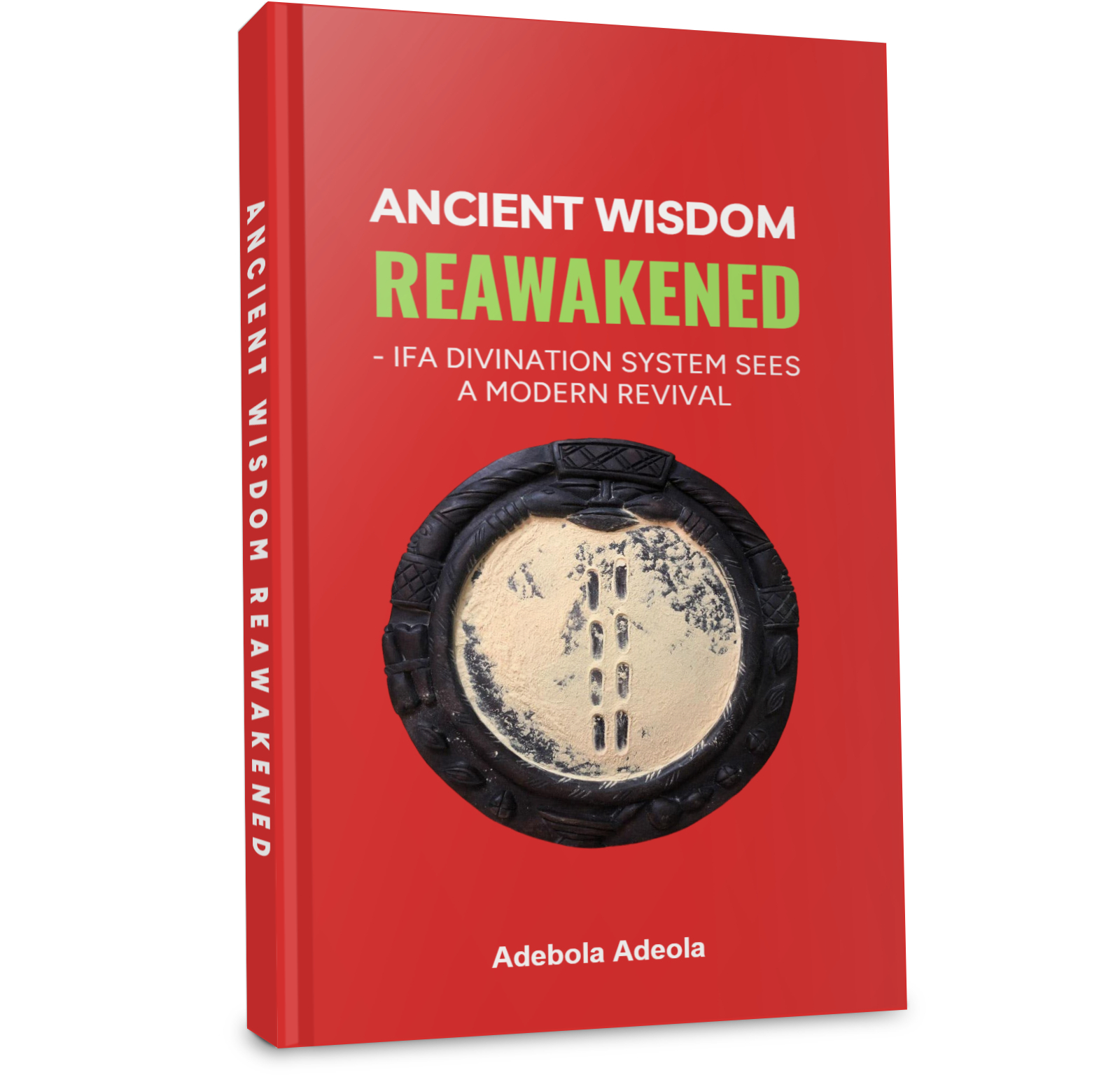
Get your copy of Ancient Wisdom Reawakened: IFA Divination System Sees a Modern Revival —
Now available in soft cover on Amazon.
Gift wisdom. Share balance. Awaken destiny.
Where Ifa is applied regularly, you will see structured schedules: weekly divination check-ins, monthly altar maintenance, and ritualized offerings tailored to specific Odu prescriptions. Those practices create feedback loops—divination recommends an action, you implement it, outcomes inform future consultations—which increases adaptive capacity in uncertain environments. Be aware that misapplied divination or guidance from untrained sources can produce harm; seeking accredited Babalawo or verified community elders reduces the risk of misinterpretation.
You can anchor your day with short, repeatable rituals that keep Ifa’s logic present: a morning libation to Ori and Eshu, lighting a candle at your altar, and offering a small food item like kola or honey after a brief reflection on intention. Divination need not be daily, but a five- to ten-minute check-in—clearing the altar, arranging consecrated objects, or reciting a remembered ese (poem)—creates continuity and keeps your decisions aligned with the patterns Ifa highlights.
For practical cleansing and focus, many urban practitioners use herbal baths (bitter leaf, palm kernel infusions) and incense to mark transitions between work and home life; these are complemented by scheduled consultations: for example, a quarterly full divination session with a certified Babalawo for life-planning, and shorter monthly altar reviews you perform yourself. Neglecting proper lineage-based initiation and training when performing advanced rites can be dangerous, so you should limit unsupervised ritual experimentation and consult experienced practitioners for complex prescriptions.
You can integrate Ifa into professional decision-making by treating divination as one data point among many: consult Ifa before signing major contracts, then map its recommendations onto quantitative risk assessments, project timelines, and stakeholder analyses. Examples include entrepreneurs in Lagos and Salvador who schedule a divination before product launches and combine Ifa guidance with market research; the practice helps them design contingency plans and community-engagement strategies that reduce reputational risk and improve uptake.
In daily urban contexts, Ifa adapts through syncretic practices and technology: diaspora communities in Brazil and Cuba have long blended Ifa with local customs to maintain social cohesion, while contemporary practitioners use secure remote consultations and digital case notes to track spiritual prescriptions alongside therapy or coaching plans. This hybrid approach lets you preserve lineage integrity while leveraging modern tools for documentation and accountability; the positive outcome is better follow-through and measurable behavioral change.
More specifically, you should establish protocols: vet practitioners by lineage and referrals, document divinatory prescriptions in writing with dates and responsible parties, and schedule follow-ups at 30-, 90-, and 180-day intervals to evaluate impact. Doing so creates empirical records you can analyze—showing, for instance, whether certain offerings or behavioral adjustments correlate with improved business stability or family harmony—and helps guard against unscrupulous actors; failure to document or to verify credentials increases exposure to fraud and harmful advice.
With these considerations, you can see how Ifa wisdom offers a living framework that grounds your decisions, clarifies your responsibilities, and reconnects you to ancestral and natural rhythms. By emphasizing balance, ethical action, and careful discernment through divination and ritual, Ifa gives you practical tools to navigate uncertainty and integrate meaning into daily life.
Applying Ifa teachings requires attentive practice: consult knowledgeable elders, engage with the Odu narratives that speak to your circumstances, cultivate disciplined ritual and ethical habits, and align your choices with communal and ecological well-being. In doing so, you strengthen your sense of purpose, deepen your relationships, and bring a measured, spiritually informed orientation to modern challenges.
A: In Ifa, the Source refers to Olodumare or Orunmila as the divine origin of creation, wisdom, balance, and destiny. For modern life, this concept invites a shift from purely material aims to a worldview that values interconnectedness, ethical responsibility, and long-term well-being. Applying the Source means aligning choices with principles of harmony, purpose, and communal good rather than short-term gain.
A: Ifa emphasizes deliberation, consultation, and divination to clarify paths and consequences. Techniques include dialogue with elders, reflective meditation on odù teachings, and using divination as a structured method to surface hidden factors and moral considerations. These practices cultivate patience, perspective, and a habit of weighing long-term outcomes before acting.
A: Daily habits include offerings or small rituals to acknowledge gratitude, recitation of proverbs and verses to center the mind, regular prayer or meditation to create pause, and communal sharing to reduce isolation. Such practices build resilience, reduce anxiety by restoring a sense of meaning, and strengthen social bonds that support emotional health.
A: Ifa teaches integrating vocation with purpose and ethics: pursuing competence, honesty, and service while considering how one’s work affects family and community. Guidance from odù can reveal gifts and obstacles, suggesting approaches to develop skills, set boundaries, and balance ambition with social obligations. It encourages practical planning alongside spiritual alignment.
A: Approach with humility, seek learning from accredited practitioners and community elders, ask permission before participating in rites, avoid publicizing sacred formulas or objects, and support institutions led by practitioners of the tradition. Prioritize relationship-building, give proper credit, and be mindful of power imbalances when applying teachings outside their original context.
A: Ifa teachings emphasize balance between humans and nature, the moral value of reciprocity, and the responsibilities of lineage and community. Practically, this translates into sustainable land use, respect for local ecosystems, rituals of thanksgiving to natural forces, and cooperative community projects that share resources and protect common goods.
A: Integration works by focusing on shared values—ethical behavior, service, reflection—and using Ifa’s methods (consultation, storytelling, proverbs) alongside meditation, counseling, or professional planning. Seek compatibility rather than fusion: maintain transparency about sources of guidance, retain respect for core Ifa protocols, and consult knowledgeable practitioners when combining rites or formal divination with other systems.